Shopify Store Optimization Checklist: How to Optimize Your Dropshipping Store

SIB Content Team
Your Shopify store is already generating traffic, but your conversion rate is not meeting expectations?
Many sellers face the same challenge. They invest more in advertising and choose attractive products, yet customers leave without completing their purchases after browsing the store.
You can hire Shopify developers to improve your store’s functionality and user experience, or you can systematically optimize your Shopify dropshipping store on your own to enhance the customer experience and reduce costs.
Quick Answer: How to Optimize Your Shopify Dropshipping Store?
For Shopify dropshipping stores, optimization should focus on improving the key factors that influence customers’ purchase decisions, including website structure, user experience, product pages, and checkout process.
To increase sales through Shopify store optimization, focus on improving the areas that directly impact conversions. This includes improving website loading speed, creating product pages that clearly showcase product value and build customer trust, and providing a simple and secure checkout experience. Personalized recommendations and interactive content can also be used to increase customer engagement throughout the shopping journey.
Data analytics tools and store optimization checklists can help identify areas for improvement, test different solutions, and make data-driven decisions to increase conversion rates.
Below are 5 key areas you can review and optimize based on your store’s current performance. This article also includes a detailed checklist at the end to help you identify conversion barriers and continuously improve your store performance.
1. Shopify Store Optimization: Improve Structure and User Experience
When customers visit your website, providing a smooth browsing experience is essential. The overall website experience can significantly influence their purchase decisions.
Enhance Store Speed and Technical Performance
Improving page loading speed and optimizing user experience can help increase the return on your advertising investment.
For dropshipping stores that rely on paid ads and social media traffic, many visitors land directly on product pages through TikTok, Instagram, or Facebook ads. If the page loads slowly, users may leave before even seeing the product, reducing the effectiveness of your advertising budget.
Shopify sellers can use tools such as Google PageSpeed Insights to evaluate website performance, including page speed, accessibility, and basic SEO metrics, helping identify areas in the Shopify store that require optimization.
The following methods can also help Shopify sellers improve store loading speed:
✧ Choose Shopify themes with clean code structures and faster loading performance.
✧ Remove unnecessary Shopify apps to reduce additional scripts, third-party resources, and unnecessary animations.
✧ Use modern image formats recommended by Shopify, such as WebP, optimize image sizes, and enable lazy loading.
✧ Reduce excessive use of videos, GIFs, and font files that may slow down page performance.
Simplify Navigation, Categories, and Product Search
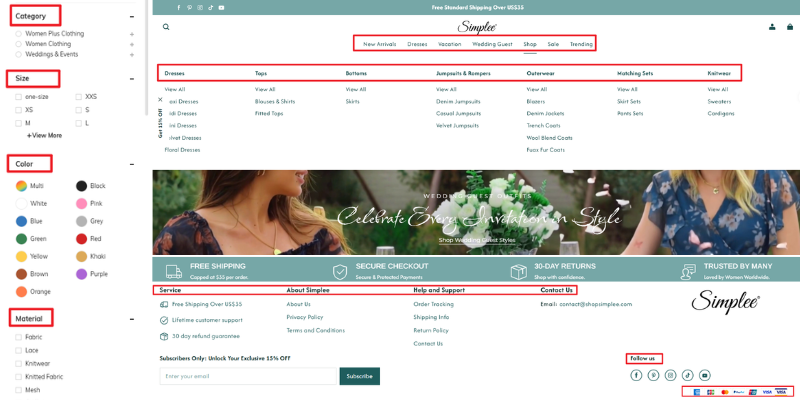
A clear navigation structure and effective product search function help customers find products they are interested in more quickly. This helps prevent customers from leaving your store due to a poor browsing experience.
Store: https://shopsimplee.com/
Dropshippers should create a clear and intuitive navigation menu, such as Home, New Arrivals, Best Sellers, and main product categories, allowing customers to quickly understand the store’s product structure.
Product categories should also be organized based on customer shopping behavior rather than simply divided by inventory types. This can reduce the effort required for browsing.
For dropshipping stores with a large number of SKUs, adding filtering options such as size, color, material, price, or usage scenarios can help customers narrow down their choices and improve shopping efficiency.
It is also important to note that users who actively search for products usually have stronger purchase intent. You should add a search bar at the top of your website. The search function should support keyword matching, autocomplete, and typo tolerance to help customers find relevant products more easily.
Create a Better Mobile Shopping Experience
Optimizing the mobile shopping experience is especially important for Shopify store optimization. Many visitors may come from social media platforms such as TikTok and Pinterest. These customers often access product pages directly through their mobile devices.
Dropshippers should ensure that their Shopify themes are responsive across different screen sizes, allowing customers to browse smoothly on smartphones, tablets, and other devices.
At the same time, simplify mobile navigation and minimize the steps customers need to take to find products. Make sure customers can easily access search, product categories, and shopping cart functions.
Since mobile screens provide limited space, product pages should display key purchase information upfront, allowing customers to quickly find the details they need.
2. Shopify Product Page Optimization: Build Trust and Drive Purchases
The product page plays a major role in turning visitors into customers.
Your product pages should clearly communicate the value of your products, strengthen trust in your brand, and encourage customers to make a purchase.
Focus on the following 6 key areas in your Shopify dropshipping store optimization:
Write Clear Product Descriptions and Core Selling Points
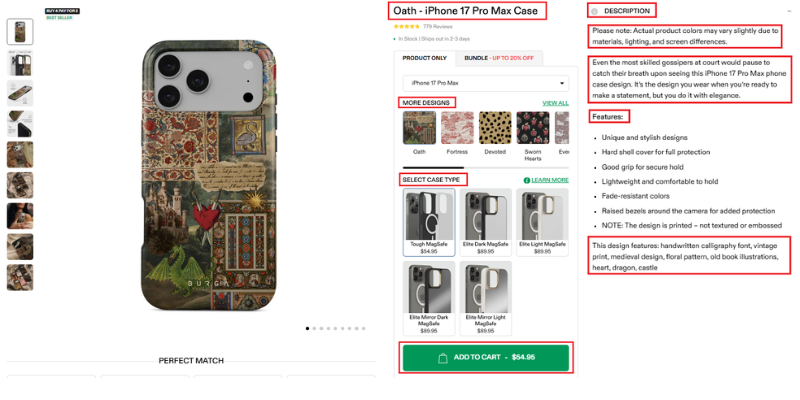
When you optimize a product page, product descriptions should not only explain product features but also highlight the value products can provide to customers.
Store: https://burga.us/
Instead of simply copying information provided by suppliers, dropshippers should focus on how the product solves customer problems, meets specific needs, and improves user experience.
You can provide AI with specific instructions to create product descriptions that focus on your target customers’ needs, product advantages, usage scenarios, and communicate purchase reasons.
Using AI to generate product descriptions can improve writing efficiency. High-quality product copy can also strengthen customer confidence and encourage purchases.
Showcase Products with Images, Videos, and UGC
Displaying different types of images and videos on product pages helps customers better understand product appearance, functions, and real-life usage scenarios.
Store: https://burga.us/
Product visuals should support different stages of the customer decision-making process. For example:
✧ Product detail images help customers understand quality and product features.
✧ Lifestyle images help customers imagine using the product in real situations.
✧ Product demonstration videos and UGC videos can further showcase product performance, increase authenticity, and strengthen purchase confidence.
Build Trust with Reviews and Social Proof
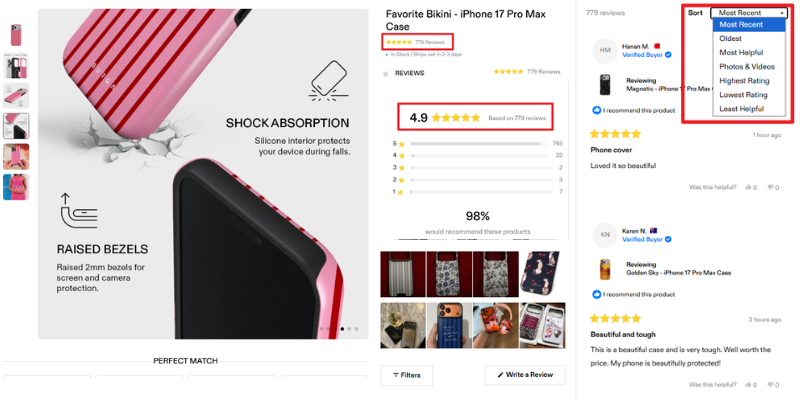
Product reviews, influencer reviews, and media mentions can help establish customer trust.
Store: https://burga.us/
You can encourage customers who have completed purchases to leave star ratings and share their experiences through text, images, or videos. Displaying this content on product pages helps potential customers reduce purchase concerns and increases the likelihood of conversion.
Provide Transparent Shipping, Return, and Refund Information
In addition to product specifications, product pages should clearly display shipping times, inventory availability, return and refund policies, usage instructions, and warranty information. Optimizing this part of your Shopify store helps reduce customer uncertainty before purchase.
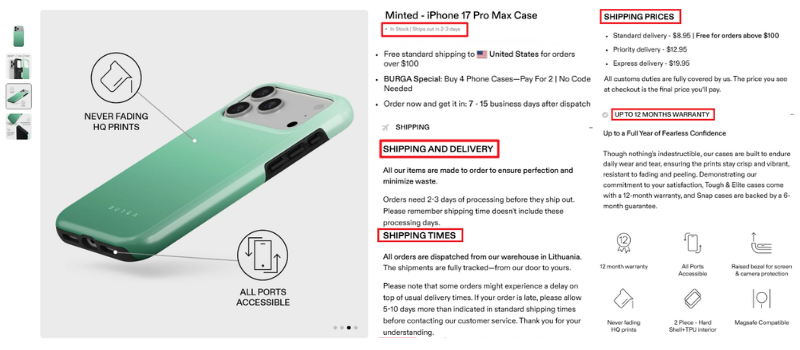
Store: https://burga.us/
Customers often pay close attention to shipping times, return processes, and order protection before making a purchase. Therefore, dropshipping stores should provide transparent shipping and after-sales information to reduce uncertainty and build customer trust.
Offer Customer Support to Reduce Purchase Concerns
Timely customer support can help address questions before and after purchase, reducing potential order losses.
Live chat can help customers find products, receive product recommendations, check order status, and get both pre-sale and after-sales support. AI customer service can also provide 24/7 responses, handle common inquiries, and reduce customer loss caused by delayed replies.
Increase Average Order Value with Product Bundles and Cross-selling
Product bundles and cross-selling can effectively increase average order value.
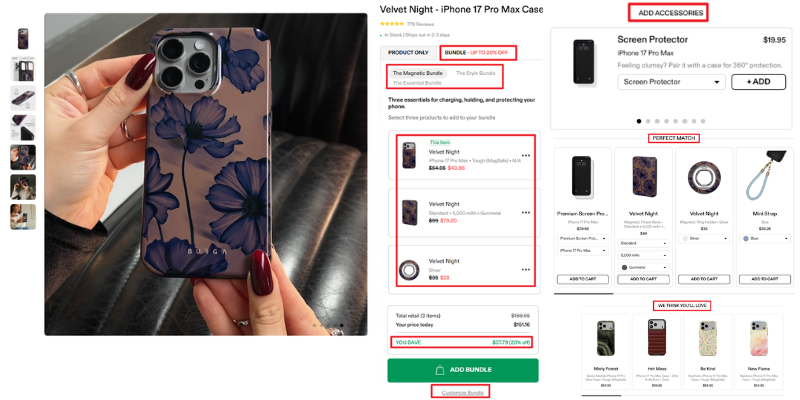
Store: https://burga.us/
Dropshippers can add relevant product recommendations on product pages, collection pages, and checkout pages. These recommendations can be personalized based on customers’ recently viewed products and browsing behavior, helping shoppers discover complementary items that better match their needs.
Compared with random product recommendations, creating bundles based on real-life usage scenarios in your Shopify store optimization can better encourage customers to purchase additional items.
3. Checkout Optimization: Reduce Cart Abandonment and Improve Order Completion
Adding products to the cart does not always mean that customers will complete their purchases.
During the final payment stage, complicated processes, unfamiliar payment methods, hidden fees, or a lack of trust signals can all cause customers to abandon their orders.
For dropshippers, checkout optimization focuses on helping customers complete their purchases quickly and securely.
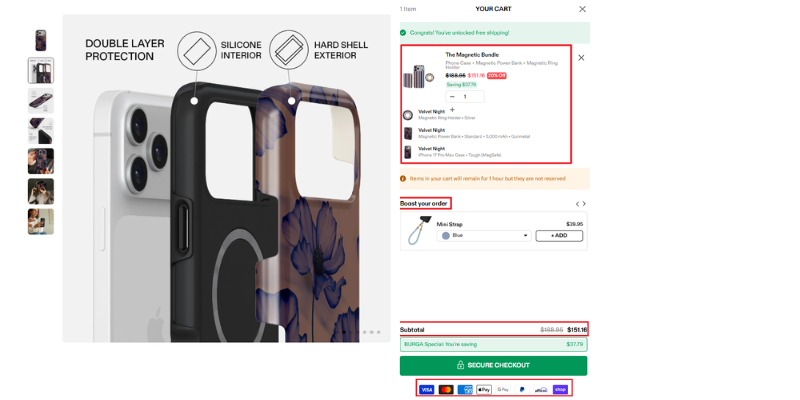
Store: https://burga.us/
Simplify the Shopping Cart Process
The more complicated the shopping cart and checkout process, the higher the chance customers will abandon their purchases. Therefore, creating a simple and seamless buying journey is essential for dropshipping store optimization.
On the cart page and throughout the checkout process, dropshippers should provide clear checkout buttons. Unless customer accounts are essential to your business, avoid requiring shoppers to sign in before checkout. Allowing guest checkout can reduce unnecessary friction in the purchase process.
The cart page should clearly display product information, shipping times, order tracking details, return policies, and customer support access points to reduce purchase concerns.
Support Flexible and Secure Payment Options
Dropshippers should ensure that the payment process is convenient and secure to prevent customers from leaving during checkout.
When optimizing your Shopify dropshipping store, you should offer payment methods that match the preferences of your target markets, such as PayPal, Apple Pay, and Google Pay. Providing familiar payment options can reduce purchase abandonment caused by limited payment choices.
At the same time, stores should minimize unnecessary form fields, especially on mobile devices. Supporting express payments and guest checkout can reduce purchase friction and improve order completion rates.
The checkout page should also display trusted payment methods, security badges, and payment provider logos to reassure customers during the payment process.
Make Pricing and Order Details Transparent
Transparent pricing and order information can reduce customer concerns and prevent cart abandonment during checkout.
Dropshippers should clearly display product details, quantities, prices, taxes, and other costs on the checkout page. This helps prevent customers from abandoning their orders after discovering unexpected charges at the final step.
4. Shopping Experience Optimization: Improve Engagement and Customer Experience
Store optimization is not only about completing a single transaction. It is also about increasing customer value and generating long-term revenue.
For stores that have already been operating for a period of time, dropshippers should make full use of existing visitor and customer data. By using data-driven personalization and automated marketing, stores can improve customer engagement and create more sales opportunities.
Recommend Relevant Products Based on Customer Behavior
Shopify dropshipping stores can recommend relevant products based on customer behavior to improve the shopping experience and increase average order value.
By analyzing customers’ browsing history, purchase history, and cart contents, stores can provide suitable product recommendations at different stages of the shopping journey.
For example, stores can display related products and frequently bought together items on product pages to encourage additional purchases. You can also showcase bundles or complementary products on cart pages to increase order value.
If a store has collected sufficient customer data, dropshippers can further segment customers based on factors such as age, interests, spending amount, and purchasing habits. This allows them to optimize product recommendations and marketing content.
Recover Lost Sales with Email and SMS Automation
Cart abandonment should be viewed as a potential sales opportunity that can be recovered through automated marketing.
Dropshippers can create different automated marketing workflows based on customer behavior:
For customers who added products to their carts but did not complete payment, send reminders through email, SMS, or push notifications to encourage them to return and complete their orders.
✧ For visitors who viewed products but did not purchase, use retargeting ads to rebuild their interest.
✧ For existing customers, use new product recommendations and personalized offers to encourage repeat purchases.
When designing automation workflows, dropshippers should not rely only on discounts. You can also address purchase concerns by highlighting product reviews, shipping information, and key selling points to improve recovery rates.
5. Data-driven Optimization: SEO, Analytics Tools, A/B Testing, and AI
Making changes based only on personal experience makes it difficult to determine which factors truly affect sales performance.
When optimizing a Shopify store, dropshippers can use effective data analytics tools to understand customer behavior, identify factors affecting traffic, conversions, and sales performance in order to make more precise improvements.
Improve Product and Collection Page SEO
Optimizing product pages and collection pages can help Shopify dropshipping stores gain consistent organic traffic, increase product visibility, and create more sales opportunities.
For dropshippers, Shopify store search engine optimization should help search engines understand page content and ensure that pages match customers’ search intent. This allows customers from organic search to find the products they need more easily.
How can dropshippers optimize their pages?
✧ Use keyword research tools (SEMrush, Ahrefs, or Google Keyword Planner) to analyze customer search behavior, identify keywords with purchase intent, and naturally incorporate them into product and collection pages.
✧ Optimize product titles, descriptions, meta titles and descriptions, URLs, and image alt text to help search engines better understand page content.
✧ Create a clear collection page structure and write valuable category descriptions to help Google understand product topics while making it easier for customers to browse your store.
✧ Use internal links between blog posts, product pages, and collection pages. Guide visitors from blog content to relevant products and categories to improve page relevance.
Analyze Store Performance with Data
Compared with optimizing your Shopify store based only on personal experience, data analysis helps Shopify sellers understand actual store performance and identify improvement opportunities based on user behavior and sales data.
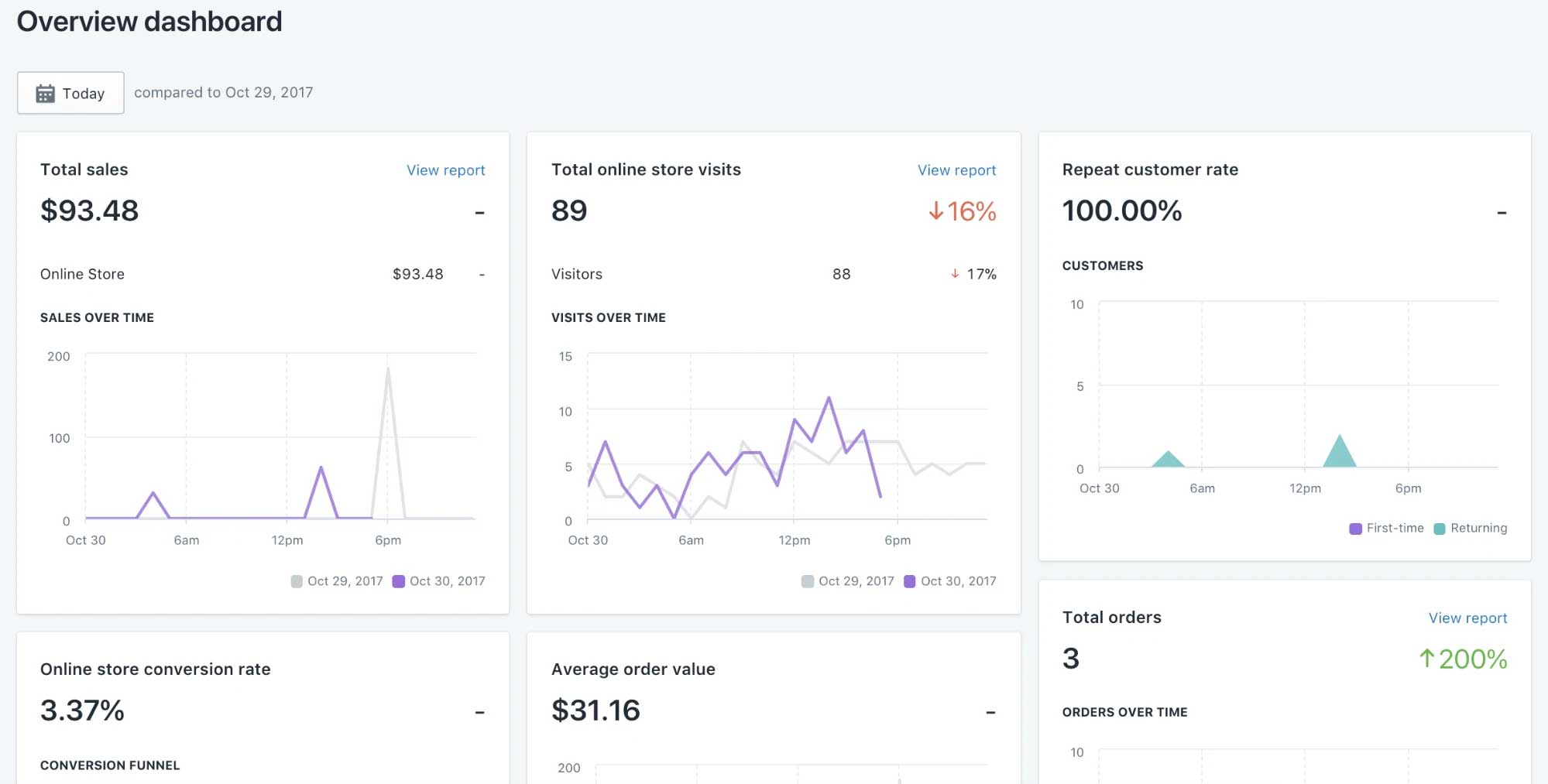
Shopify’s built-in analytics features allow sellers to track sales, orders, customer behavior, traffic sources, and conversion performance to understand overall store operations.
Google Analytics helps sellers analyze traffic sources, page visits, user behavior, and conversion paths. These insights can help identify pages where customers are leaving and determine which channels bring higher-quality visitors.
In addition to basic traffic metrics, dropshippers should also monitor key performance indicators such as conversion rate, average order value, customer lifetime value, and customer acquisition cost. These metrics can identify problems affecting store performance and help sellers adjust sales strategies and marketing campaigns.
Run A/B Tests to Validate Store Improvements
A/B testing helps you validate the effectiveness of different page versions, features, or elements using real customer data.
For dropshipping stores that already have traffic, we recommend prioritizing tests on key pages that directly affect conversions, such as product pages, landing pages, cart pages, and checkout flows.
You can also combine A/B testing with heatmaps and session recording tools to observe customer clicks, scrolling behavior, and engagement patterns. These insights can help identify page issues that affect conversions and continuously improve the shopping experience.
Use AI Tools to Improve Store Optimization Efficiency
AI tools can help dropshippers automate repetitive tasks and improve your Shopify store optimization efficiency.
During the optimization process, AI can generate and improve content (product descriptions, blog posts, email marketing copy, and social media content). It can also analyze data such as customer behavior and sales performance to help identify potential improvement opportunities.
However, dropshippers should always review whether AI-generated content meets real customer needs. You should also use actual business data to evaluate the effectiveness of AI recommendations.
View Optimization Checklist for Your Shopify Dropshipping Store With SourcinBox
Store optimization is not a one-time task. It requires continuous review and improvement across multiple areas, including website performance, product pages, checkout processes, shopping experience, and data performance.
We have created a Shopify store optimization checklist to help you quickly find areas that need improvement.
| Optimization Area | Checklist |
|---|---|
| Store Structure & User Experience | ☐ Optimize store speed and technical performance |
| ☐ Create clear navigation and product categories | |
| ☐ Improve mobile shopping experience | |
| Product Page Optimization | ☐ Write unique product descriptions |
| ☐ Add product images, videos, and UGC | |
| ☐ Display reviews and social proof | |
| ☐ Provide transparent shipping and return information | |
| ☐ Use bundles and cross-selling strategies | |
| Checkout Optimization | ☐ Simplify cart and checkout process |
| ☐ Offer secure and flexible payment options | |
| ☐ Display clear pricing and order details | |
| Shopping Experience Optimization | ☐ Add personalized product recommendations |
| ☐ Recover abandoned carts with automation | |
| SEO & Data-Driven Optimization | ☐ Optimize product and collection pages |
| ☐ Track conversion, AOV, CLV, and CAC | |
| ☐ Run A/B tests regularly | |
| ☐ Use AI tools to improve efficiency |
Optimizing your Shopify dropshipping store can improve customer experience, increase traffic efficiency, and improve order conversion rates. However, as your store grows and order volume increases, a stable supply chain and efficient fulfillment capabilities become more important.
SourcinBox provides product sourcing, quality inspection, warehousing, and order fulfillment services for Shopify dropshippers:
✧ Reliable supplier selection
✧ Product quality inspection before shipping
✧ Free warehousing services
✧ Custom packaging and branding support
✧ Global order fulfillment
✧ Integration with Shopify and other platforms
Whether you are testing new products or preparing to scale your existing business, SourcinBox can help you build a more stable and efficient supply chain, allowing you to focus on growing your store.
Frequently Asked Questions
How can I optimize my Shopify dropshipping store to increase conversions?
Optimizing a Shopify dropshipping store requires reviewing key areas such as store structure, user experience, product pages, and checkout process through a comprehensive checklist. Dropshippers can also use store analytics tools to determine where optimization is needed.
What parts of a Shopify dropshipping store should I optimize first?
Dropshippers should prioritize the key areas that directly influence customer purchase decisions, such as product pages, mobile experience, and checkout process.
Product pages should clearly communicate product value and build trust through images, videos, and customer reviews. Mobile experiences should provide fast loading speeds, simple navigation, and convenient purchasing options. The checkout process should minimize unnecessary steps and offer secure, convenient payment methods.
How can I optimize my Shopify product pages to get more sales?
The goal of Shopify product page optimization is to help customers quickly understand product value and reduce purchase concerns.
Sellers should highlight product benefits, usage scenarios, and the problems the product solves. High-quality images, product videos, UGC content, and customer reviews can increase authenticity and build trust.
Clearly displaying shipping information, refund policies, and product details, along with adding relevant product recommendations, can further improve conversion rates and average order value.
Why does my Shopify store get traffic but no sales?
If your store receives traffic but generates few sales, it usually indicates problems in the conversion process. Common issues include weak product pages, insufficient customer trust, unclear shipping information, poor website experience, or a complicated checkout process.
You can use Shopify Analytics, Google Analytics, or heatmap tools to analyze customer behavior and identify where visitors leave. Optimizing product pages, shopping flows, and marketing strategies based on data can improve traffic conversion efficiency.
How can I reduce cart abandonment on my Shopify store?
Reducing cart abandonment requires removing customer concerns and reducing friction before payment. Sellers can simplify the checkout process, enable guest checkout, and offer multiple popular payment options.
You should also display important information such as shipping costs, delivery times, and return policies in advance to prevent concerns at the final stage of purchase. When customers abandon their carts, sellers can use abandoned cart emails, SMS, and retargeting ads to encourage them to complete their purchases.
Share Article: