What Is Dropshipping? How It Works and How to Start in 2026

SIB Content Team
If you follow cross-border ecommerce, Shopify, or TikTok Shop, you have probably heard the term “dropshipping.” But what is dropshipping, how does it work in 2026, and is it still worth starting in 2026?
Dropshipping is a retail fulfillment method where you focus entirely on sales and branding, leaving inventory management and global shipping to your supply chain partner. You build the store, list products, attract customers, and handle customer service. When a customer places an order, the order is sent to a supplier, manufacturer, fulfillment center, or dropshipping agent, who ships the product directly to the customer.
For beginners, the better question is not simply “Can dropshipping make money?” but “How does dropshipping work, who it is suitable for, and how to start with lower risk?”
In this guide, we will answer some of the most common questions beginners have about dropshipping, including:
- How does dropshipping work?
- What are the pros and cons of dropshipping?
- Is dropshipping still worth it in 2026?
- How do you start a dropshipping business?
- How much does it cost to start dropshipping?
- Who is dropshipping suitable for?
- How can SourcinBox help dropshippers?
If you are considering dropshipping, this guide will help you understand the basics, avoid common mistakes, and make better decisions before you start. Let’s dive into the article with the questions.
What Is Dropshipping?
Dropshipping is a retail fulfillment model where dropshippers can sell products online without buying or storing inventory upfront.
In a traditional ecommerce business, sellers usually buy products in advance, store inventory, manage a warehouse, and ship orders themselves. In the dropshipping model, you only purchase the product after a customer places an order. Your supplier or dropshipping agent then handles packing and shipping on your behalf.
Throughout the process, your job is to focus on product research, store setup, marketing, and customer inquiries. The dropshipping supplier or dropshipping agent handles sourcing, order processing, packaging, shipping, tracking updates, and sometimes after-sales support.
In essence, dropshipping separates “selling” from "fulfillment." You sell the product, and your supply chain partner delivers it.
How Does Dropshipping Work?
Dropshipping usually follows a simple three-step process.
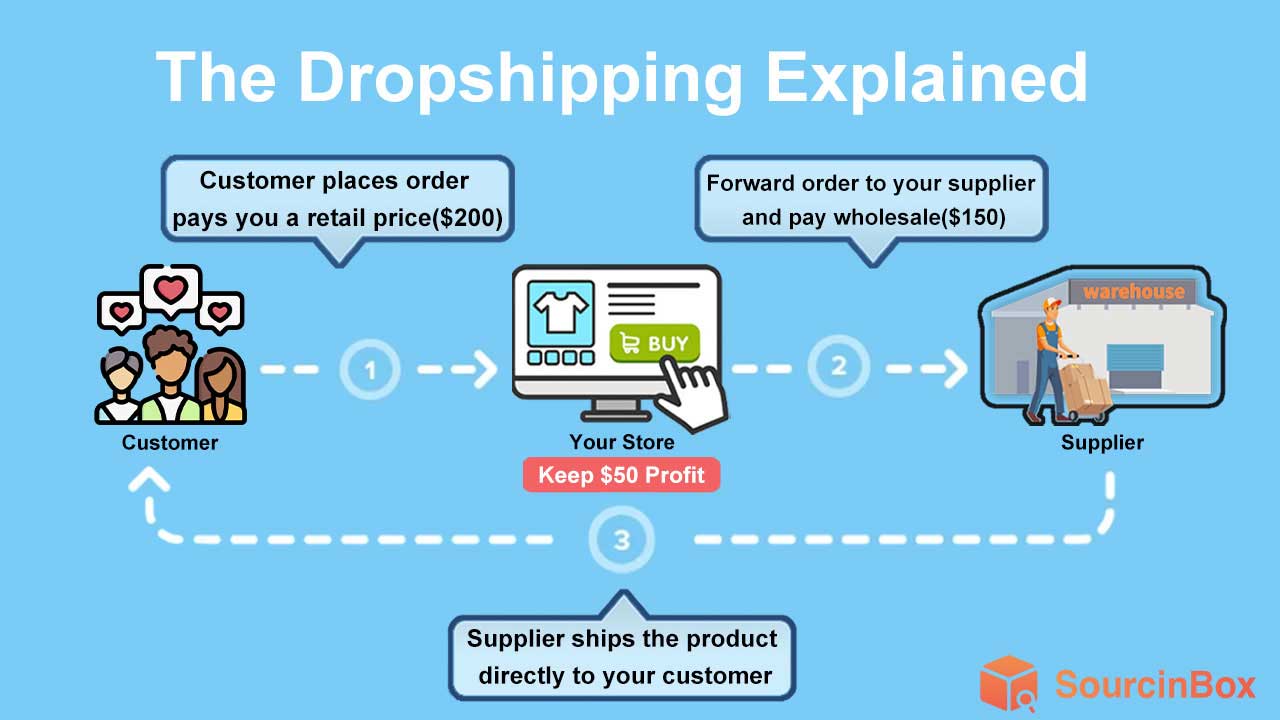
➀ A customer places an order in your online store and pays for the product.
➁ You send the order details to your supplier or dropshipping agent and pay the product cost and shipping fee.
➂ The supplier or agent ships the product directly to the customer, and you keep the difference between your selling price and total costs.
For example:
| Process | Amount |
|---|---|
| Customer places an order in your store | Pays $200 |
| You purchase the product from your supplier | Pays $120 |
| Shipping and other costs | $30 |
| Your gross profit | $50 |
💡Keep in mind that gross profit is not the same as net profit. Advertising costs, platform fees, payment processing fees, refunds, tools, and after-sales expenses all affect your actual earnings.
There are three key roles in the dropshipping process: the customer, your store, and your supply chain partner.
The customer buys from your store and judges the experience based on your product page, customer service, shipping updates, and after-sales support. Even if you do not ship the product yourself, customers still expect your store to take responsibility for the shopping experience.
Your store is the front end of your business. It can be a Shopify store, TikTok Shop, Amazon store, eBay store, WooCommerce site, or another e-commerce platform. Your store is not only where products are displayed and orders are received. It also helps build trust, explain product benefits, convert traffic, and shape the customer experience.
Your supplier or dropshipping agent handles fulfillment, including sourcing, packing, shipping, and tracking updates.
The Pros and Cons of Dropshipping
Before starting a dropshipping business, it is important to understand both its advantages and limitations. Dropshipping lowers the barrier to entry, but it is not a shortcut to easy money. Knowing the pros and cons will help you decide whether this model fits your goals, budget, and skills.
Pros of Dropshipping
➤ Easy to Start an Online Store
Compared with traditional ecommerce, dropshipping is easier to start. You do not need to buy large amounts of inventory or build a fulfillment team before making your first sale. With platforms like Shopify or WooCommerce, beginners can set up a basic store quickly and begin testing products.
However, launching a store is only the beginning. To generate orders, you still need strong product pages, clear pricing, effective creatives, and a trustworthy customer experience.
➤ No Need to Hold Inventory or Ship Orders Yourself
One of the biggest benefits of dropshipping is that you do not need to manage inventory, pack products, or ship orders yourself. After a customer places an order, a supplier, manufacturer, or dropshipping agent handles fulfillment.
This saves warehouse and labor costs, giving you more time to focus on product research, marketing, store optimization, and customer communication. Still, you need to monitor product quality, shipping speed, and logistics performance because they directly affect reviews and customer satisfaction.
➤ Easier to Test Products
Because you do not need to stock inventory upfront, dropshipping makes product testing more flexible. If a product performs poorly, you can remove it or reduce promotion. If it shows potential, you can improve the page, creatives, pricing, and supply chain.
This makes dropshipping a practical option for beginners who want to test demand with a smaller budget before committing to inventory.
➤ Easier to Scale
Once a product starts generating stable orders, you can scale by increasing ad spend, expanding sales channels, improving creatives, or adding related products.
Unlike traditional ecommerce, early scaling does not require you to expand warehouse space or hire a large fulfillment team immediately. However, as orders grow, supplier capacity, inventory stability, shipping speed, and after-sales support become much more important.
➤ Flexible to Operate
Dropshipping can be managed online, making it suitable for individual sellers, small teams, and entrepreneurs. You can manage orders, adjust ads, reply to customers, and communicate with suppliers remotely.
However, flexibility does not mean the business runs by itself. Even with automation tools, you still need to monitor product performance, customer feedback, and the supply chain.
Cons of Dropshipping
➤ Profit Margins Can Be Low
Because dropshipping is relatively easy to start, competition can be intense. Many dropshippers offer similar products with similar images and ad creatives, which often leads to price competition.
Real profit depends on more than the product cost. Shipping fees, advertising costs, platform fees, payment processing fees, refunds, reshipments, and software tools all affect your margins.
To improve profitability, dropshippers need to choose the right niche, work with reliable suppliers, increase average order value, improve conversion rates, and create product differentiation rather than competing solely on price.
➤ Customer Acquisition Can Be Expensive
Dropshipping may reduce inventory costs, but new stores still need traffic. Most new stores have little organic traffic, so dropshippers still need to invest time, money, or both to attract customers.
Paid ads can help test products quickly, but they require ongoing testing of products, creatives, audiences, and landing pages. Without experience, beginners may spend money without getting stable returns. Over time, it is safer to combine paid ads with SEO, short-form video, social media, email marketing, and influencer collaborations.
➤ Limited Control Over the Supply Chain
Because you do not handle inventory, packing, or shipping yourself, you also have less control over the fulfillment process. Product quality, shipping speed, inventory accuracy, and logistics performance depend heavily on your supplier or fulfillment partner.
If a supplier ships slowly, provides inconsistent quality, or has inaccurate stock information, your store may receive complaints. That is why supplier selection should include processing time, quality inspection, shipping options, communication speed, and after-sales policies—not just price.
➤ After-Sales Issues Can Be Complicated
Customers buy from your store, so they will usually contact you first when something goes wrong. From the customer’s perspective, you are fully accountable for every supply chain hiccup—whether it’s a damaged item, delayed delivery, or missing tracking update.
This often means you need to communicate between the customer and the supplier. If the supplier responds slowly or does not support refunds or reshipments, you may have to absorb part of the loss. Before working with any supplier, confirm their return, refund, reshipment, and abnormal order policies.
Is Dropshipping Still Worth It in 2026?
Yes, dropshipping is still worth trying in 2026, but it is no longer suitable to run it with the old approach of simply finding a winning product, copying creatives, and launching ads.
In the past, many dropshippers could test products quickly with low-cost items and cross-border direct shipping. In 2026, customers expect faster delivery, better product quality, clearer tracking, and more reliable after-sales service. Slow shipping or inconsistent quality may still bring short-term orders, but it can also lead to refunds, negative reviews, and complaints.
Traffic acquisition is also changing. Facebook Ads and Google Ads still matter, but relying on paid ads alone is risky. Short-form video, TikTok Shop, Instagram Reels, YouTube Shorts, SEO content, and influencer partnerships are becoming important ways for dropshippers to acquire traffic. For beginners, a product’s content potential is now almost as important as its price.
AI dropshipping is also gaining attention. It is not a completely new business model, but rather the use of AI tools to improve parts of the dropshipping workflow, such as product research, product descriptions, ad copy, customer service replies, and data analysis.
💡 To learn more, read our AI dropshipping guide.
Compliance and tax costs are becoming harder to ignore. Different markets are tightening rules around product safety, certifications, labeling, customs clearance, and platform policies.
Low-value small parcel shipping is also facing more pressure. For example, starting July 1, 2026, parcels entering the EU with a value below €150 will be subject to a fixed €3 customs duty.
Dropshippers that rely on low-priced products, thin margins, and cross-border direct shipping will need to recalculate their pricing, logistics costs, and profit margins.
So, dropshipping is not dead. But dropshippers need to move from simply selling winning products to building better products, content, supply chains, and brands.
If you only copy other dropshippers, it will be difficult to stay competitive. If you understand your audience, improve your product pages, control the fulfillment experience, and build differentiation, dropshipping can still be a practical entry point into ecommerce.
How to Start Dropshipping?
Once you understand the pros and cons, the next step is learning how to start a dropshipping business. A basic dropshipping business usually involves five steps.
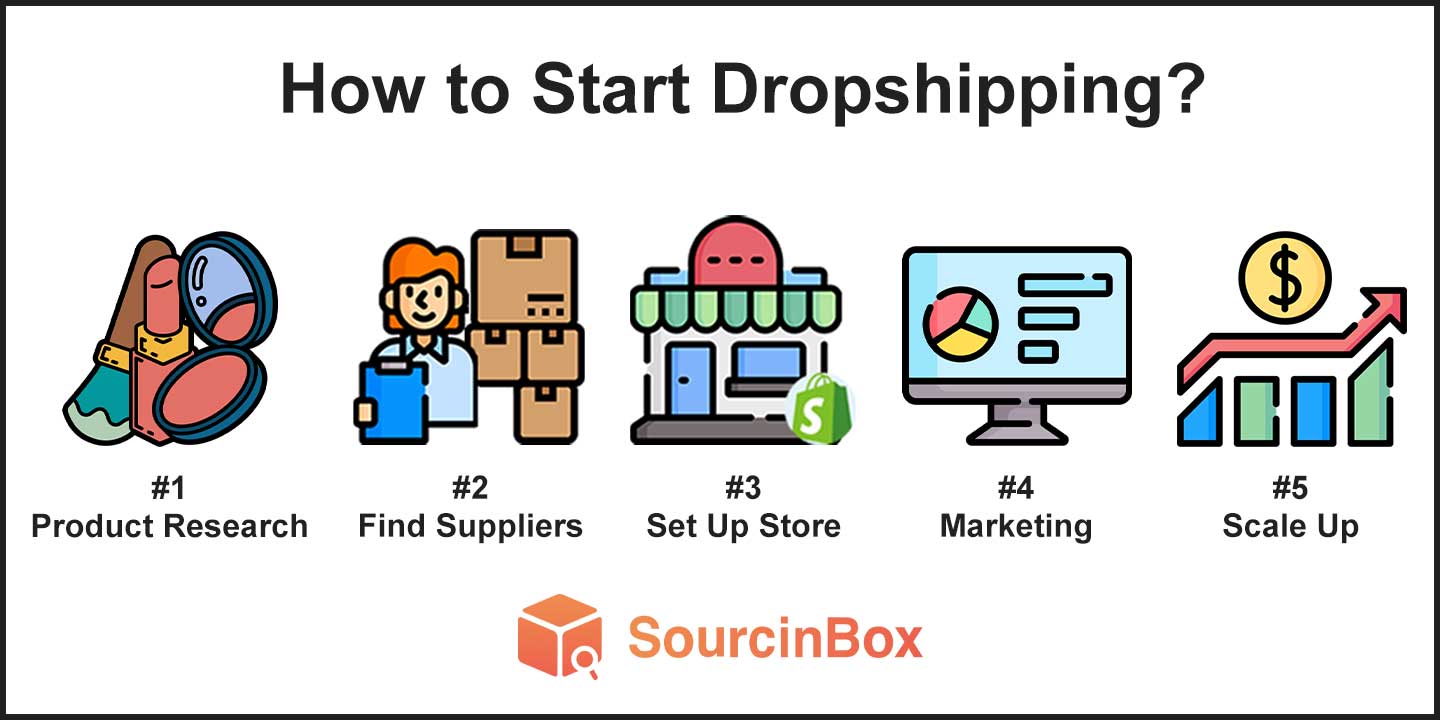
Step 1: Product Research
The success of dropshipping depends heavily on what you sell. In the past, many dropshippers focused on finding “winning products.” That idea still matters, but beginners should not chase trends blindly. Look for products with real demand, clear use cases, strong visual appeal, reasonable margins, and manageable shipping risks.
A good product for dropshipping should solve a clear problem or serve a specific audience. The perfect product is made for social media video, effortless to explain, and safe to ship. Small, lightweight, durable products are usually easier for beginners to test.
Step 2: Find Reliable Dropshipping Suppliers
After choosing a product, you need a supplier or dropshipping agent that can fulfill orders reliably. AliExpress is great for beginners testing the waters because it’s easy to use and packed with millions of products. However, as order volume grows, shipping speed, product quality, packaging, and after-sales response become more important. At that stage, relying only on AliExpress may limit your store’s growth.
For more stable sourcing, quality inspection, packaging, and cross-border fulfillment, you can work with a dropshipping agent. A dropshipping agent and fulfillment partner like SourcinBox can help dropshippers manage sourcing, quality checks, packaging, and order fulfillment more efficiently.
💡 Pro Tip for 2026: Never blindly trust the shipping times listed on supplier marketplaces. Always order a sample to test the actual delivery days and check if the packaging contains unbranded or messy Chinese invoices before scaling your ads.
Step 3: Build Your Dropshipping Store
Once you have a product and supplier, you can build your store. Many beginners choose Shopify because it is easy to list products, set prices, process orders, and install apps. Depending on your market, you can also use WooCommerce, TikTok Shop, eBay, or other platforms.
A live store is only the foundation. The real goal is to build trust. Your product pages should clearly explain the product benefits, use cases, specifications, shipping time, return policy, and FAQs. The clearer your page is, the easier it is for customers to buy and the fewer after-sales issues you may face later.
Step 4: Drive Traffic
New stores usually have little organic traffic, so driving traffic is critical. In the past, many dropshippers relied mainly on Facebook Ads and Google Ads. In 2026, relying on a single channel is risky. TikTok, Instagram Reels, YouTube Shorts, SEO content, influencer collaborations, and email marketing can all help drive traffic.
When testing products, do not only look at orders. Track click-through rate, add-to-cart rate, conversion rate, ad cost, refund rate, and customer feedback. Marketing is not just about bringing visitors to your store. It also helps you evaluate whether the product, page, price, and supply chain can work together.
Step 5: Scale Up
When a product starts generating consistent orders, you can begin scaling. But scaling is not just about increasing ad spend. You also need to improve product pages, create more ad creatives, reduce sourcing costs, improve shipping speed, and add related products or bundles.
As order volume grows, your supply chain becomes more important. If your supplier ships slowly, runs out of stock, or provides weak after-sales support, more sales may lead to more refunds and complaints. Long-term scaling depends on building a stable product line, fulfillment process, and customer experience.
How Much Does It Cost to Start Dropshipping?
Dropshipping does not require a large inventory investment, but it is not completely free. You still need a budget for your store, product samples, tools, marketing tests, and basic operations.
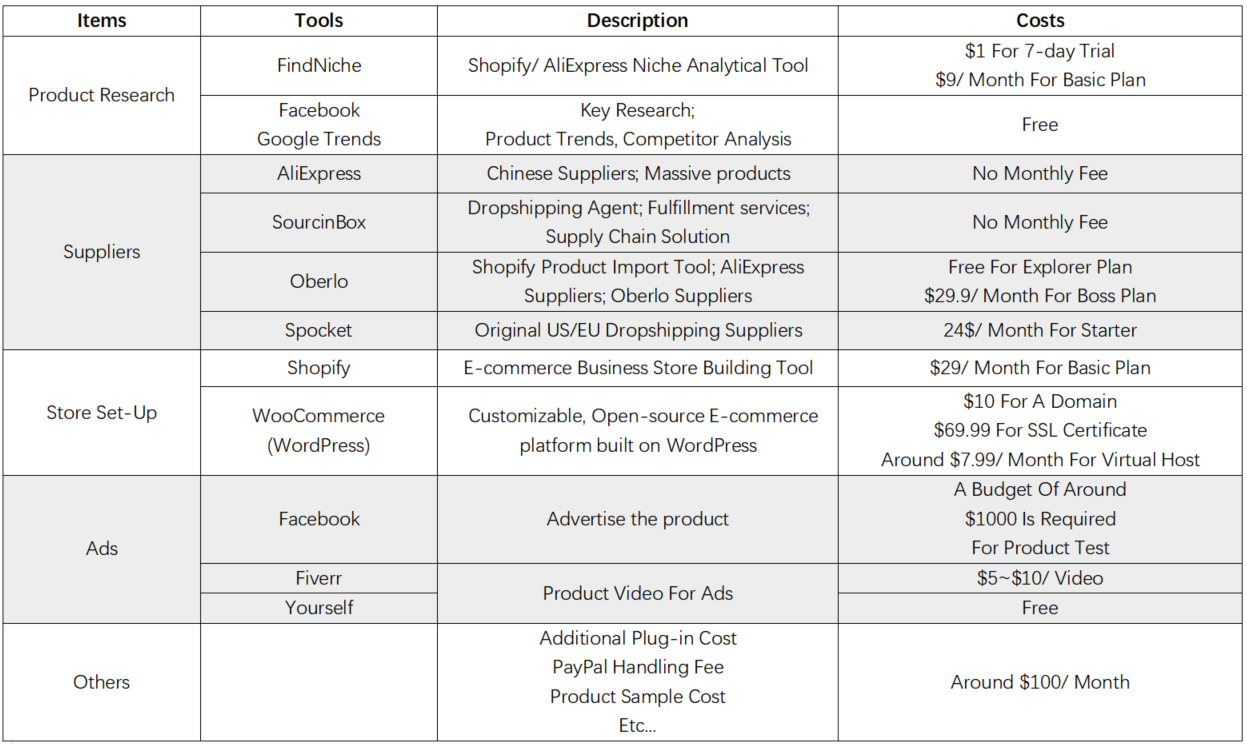
In general, many beginners prepare around $500–$2,000 for early testing. If your budget is limited, you will need to rely more on free traffic, short-form video, SEO, and careful product testing. A larger budget does not guarantee success either, because ads, product research, and supply chain management still require experience.
A safer approach is to start small, test the product and page first, and then increase investment based on real data.
Who Is Dropshipping Suitable For?
So, who is dropshipping suitable for, and who is it not suitable for?
Dropshipping is more suitable for people who want to try ecommerce with lower inventory pressure. Compared with traditional ecommerce, dropshippers do not need to purchase large amounts of inventory upfront, rent a warehouse, or build a fulfillment team. This makes dropshipping more suitable for individual sellers, small teams, and beginners who want to learn ecommerce with relatively lower risk.
However, dropshipping is not suitable for people who expect to get rich overnight. Although the barrier to entry is relatively low, doing it well still requires product research, product page optimization, advertising, content marketing, customer service, and supply chain management. For beginners, these skills need to be developed through continuous testing and review. They cannot be mastered in just a few days.
How SourcinBox Helps Your Dropshipping Business
For beginners and growing sellers, the supply chain is often the most underestimated part of dropshipping. Stable sourcing, consistent quality, reliable packaging, and timely shipping can directly affect store reviews, repeat purchases, and ad performance.
SourcinBox is a dropshipping agent and fulfillment platform built for cross-border ecommerce sellers. It supports key parts of the supply chain, including product sourcing, quality inspection, packaging customization, warehousing, order fulfillment, and after-sales assistance.
Here is how SourcinBox can support dropshipping sellers:
| SourcinBox Support | How SourcinBox Helps Dropshippers |
|---|---|
| Product Sourcing | Help dropshippers source suitable products from Chinese suppliers and manufacturers, including products from 1688, Taobao, and other supply chain channels. |
| Quality Inspection | Check product appearance, quantity, packaging, and basic quality before shipping to reduce after-sales risks caused by damaged items, missing accessories, wrong products, or packaging issues. |
| Packaging & Private Labeling | Support brand labeling, packaging customization, and product bundling, helping sellers improve brand image and create a more professional customer experience. |
| Warehousing & Order Fulfillment | Support inventory storage, order processing, global shipping, and tracking number synchronization, helping sellers handle daily orders and business growth more efficiently. |
| 1-on-1 Support | Provide a 1-on-1 customer manager to assist with product sourcing, order tracking, logistics updates, and after-sales issues. |
Instead of wasting hours juggling communication with multiple manufacturers, working with a dedicated dropshipping agent centralizes your fulfillment. This cuts out communication friction, automates order processing, and frees you up to focus entirely on marketing and scaling your brand.
If you are already receiving orders or looking for a more stable fulfillment solution, SourcinBox can help you manage sourcing, quality inspection, packaging, and cross-border shipping more efficiently.
Frequently Asked Questions About Dropshipping
1. Is Dropshipping Legal?
Yes, dropshipping is completely legal. It is simply a fulfillment method where a supplier ships products for you. It only becomes illegal if you sell counterfeit products, infringe on trademarks, or fail to comply with local tax and consumer safety laws.
2. Is Dropshipping Still Profitable in 2026?
Yes, dropshipping remains profitable, but the "get-rich-quick" era of copy-pasting cheap products is officially dead. As a multi-billion-dollar fulfillment method, it still offers a low-risk entry into e-commerce. However, rising ad costs, smarter consumers, and strict platform policies mean your approach must evolve to stay profitable.
3. What Is AI Dropshipping
AI dropshipping means using AI tools to support parts of the dropshipping workflow, such as product research, product descriptions, ad copy, customer service replies, data analysis, and store optimization.
4. What Are the Best Low-Risk Dropshipping Niches for Beginners in 2026?
The best low-risk niches are pet accessories, home organization, and fitness gear. These products are lightweight and hard to break during shipping.
Trending Apparel: [10 Profitable Summer Clothing Dropshipping Products for 2026]
High-Margin Toys: [Best Kids Toys to Sell in 2026: Sourcing Guide & Top Picks]
Full Market Blueprint: [14 Most Profitable Dropshipping Niches for 2026]
5. What Is the Difference Between Dropshipping and Amazon FBA?
With Amazon FBA, sellers send inventory to Amazon warehouses in advance, and Amazon handles storage, packing, delivery, and part of customer service. With dropshipping, dropshippers usually do not stock inventory upfront. Orders are fulfilled and shipped by suppliers or agents only after a customer makes a purchase.
Final Takeaways
Dropshipping in 2026 is different from what it used to be. Customers care more about shipping speed, product quality, and shopping experience. Platforms are also paying more attention to compliance. The old approach of finding a winning product, copying creatives, and running ads is no longer enough for most beginner dropshippers.
But the core value of dropshipping has not changed. It is still a relatively asset-light ecommerce model. AI tools can improve content and operational efficiency, niche positioning can help stores build clearer differentiation, and reliable dropshipping agents can reduce fulfillment and after-sales risks.
If you want to start dropshipping, you do not need to make everything perfect from the beginning. Start with a lower-risk product direction, prepare a basic testing budget, build your store, and validate market feedback. As your volume grows, move from simple selling to brand building by upgrading your product quality, custom packaging, content assets, and supply chain efficiency.
Ready to build a more reliable dropshipping supply chain? Sign up for SourcinBox today to get support with product sourcing, quality inspection, packaging, and cross-border fulfillment.
Share Article: