Can You Do Dropshipping from Sites Like Temu in 2025? Or Is There a Better Way?

SIB Content Team
Temu has quickly become one of the most popular e-commerce platforms worldwide, thanks to its ultra-low prices and massive product range. From clothing and electronics to home essentials, Temu offers a convenient one-stop shopping experience. Yet, in 2025, many consumers are actively seeking the best Temu alternatives.
Have you ever felt frustrated with Temu’s long shipping times? Do you worry about product quality, struggle with after-sales support, or feel too dependent on the platform with little control? Or perhaps you’ve been searching for an alternative online shopping site that better fits your specific needs?
If you have any of the above concerns, this article is tailor-made for you.
This article delves into the best Temu alternatives, examining the key challenges Temu and its competitors face in 2025. More importantly, this article will show you how to break free from Temu’s limitations and build your own “Temu-style” dropshipping store — giving you full control over your profits and customer relationships.
Why Are People Searching for Sites Like Temu in 2025
In 2025, more and more people are searching for sites like Temu. Whether it’s ultra-low prices, a wide variety of products, or convenient cross-border shipping, these e-commerce platforms have captured global attention.
But why is Temu successful? Why are people searching for sites like Temu? Is it a concern about product quality? Delays in logistics and delivery? Or shortcomings in customer service? Let’s dive in and find out!
Why is Temu Successful
Temu is one of today’s most popular shopping platforms, best known for its ultra-low prices. Since its launch in 2022, Temu has rapidly gained a large user base through massive marketing investments and a gamified shopping experience that incorporates numerous discounts.

As of October 2024, Temu has been downloaded over 484.31 million times worldwide. Today, the platform boasts more than 292 million monthly active mobile users, with annual sales projected to reach $70.8 billion.
What exactly drives Temu’s impressive success? The core reasons can be summarized into three main factors:
Ultra-Low Prices and Subsidies
Temu’s core strategy is to leverage traffic with ultra-low prices and high subsidies. This not only brings irresistible price dividends to consumers, but also helps the platform quickly acquire users.
From home essentials costing just a few dollars to apparel and accessories priced in the tens, Temu’s low-price strategy spans nearly every category, perfectly appealing to consumers' instinct for high cost-effectiveness.
This “price-for-volume” approach not only helped Temu quickly capture market share in its early stages but also cultivated the habit of “buy cheap, shop Temu”, becoming a key driver behind its explosive user growth.
Gamified and Social Shopping Experience
Temu is more than just a platform for filling shopping carts—it combines shopping with entertainment. The app invites users to engage in the games and encourages social sharing, such as rewarding users with free products when they share deals with friends.
This fusion of shopping and game not only creates a more interactive and enjoyable user experience but also fosters a sense of community and anticipation among users.
Viral marketing
Temu excels at leveraging users' authentic experiences as marketing content, achieving viral reach through social trust on platforms. Whether it is the “buyer show cashback” incentive, holiday promotions, or localized community operations, Temu improves conversion rates by leveraging users' social trust chain through low barriers, high temptation, and strong social interaction.
In less than two years, Temu has attracted tens of millions of new users through a viral marketing mechanism where “users recruit users”. Rather than relying solely on traditional advertising, it uses incentives, social interaction, and gamification to transform every user into a marketer.
What’s Changing in 2025?
In 2025, some changes are quietly taking place – they are driving a large number of users to search for Temu alternatives. What's fueling this emerging trend?
Product Quality Concerns
While Temu offers ultra-low prices, there are potential quality concerns with its products.
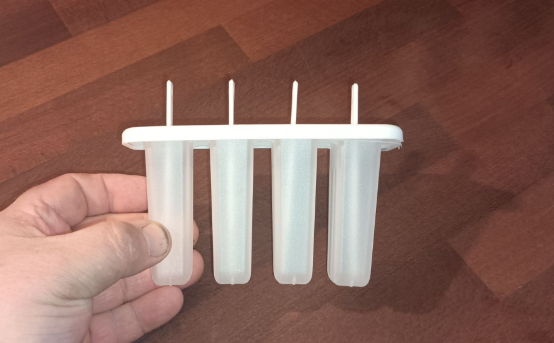
A UK customer’s experience illustrates this perfectly: he wanted to buy ice lolly moulds for his kitchen without spending much, so he ordered one from Temu. However, upon receiving the mold, he discovered that it was far different from the website image than he had expected.
He had expected it to be a regular size, but the mold was only about 3 inches long, roughly the size of his thumb, a stark difference from the dimensions shown on the website.
Source: Facebook
This discrepancy not only damages the user’s shopping experience but also highlights the quality control issues that may exist behind low prices.
Logistics and Shipping Challenges
Shipping experiences have also raised concerns: long delivery times and delayed tracking updates have become a headache for many users.
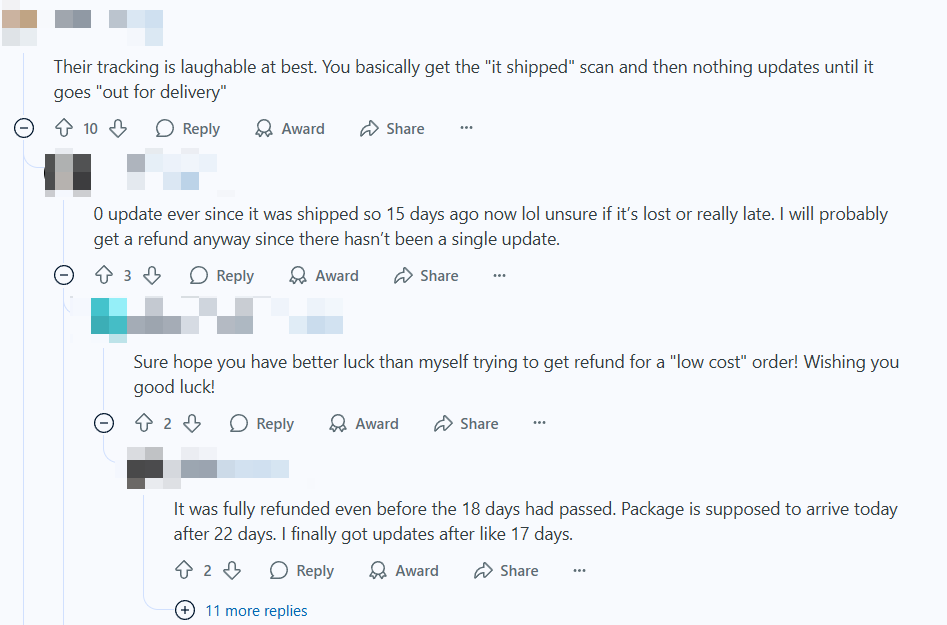
A Canadian user complained on Reddit that Temu’s delivery speed was unbearable - the platform promised delivery within 7-15 days, but six days after placing the order, he still hadn’t received the delivery information.
Many users echoed this complaint, saying that they had also encountered similar situations: logistics information often stagnates after displaying “shipped”, with no updates on key information such as subsequent transportation progress and estimated delivery time, leaving them to wait blindly for their packages.
Source: Reddit
This lack of transparency in the logistics experience has significantly reduced many users’ trust in Temu.
Customer Service Issues
When the above problems occur, customer service performance often makes the situation worse, further escalating user dissatisfaction.
As of August 2025, the U.S. Better Business Bureau (BBB) reports that Temu has received a total of 4,780 complaints over the past three years. Of these, more than 1,600 pertain to product issues, over 1,200 relate to shipping problems, and the rest largely involve after-sales and customer service concerns.
Temu’s Trustpilot rating is 2.3 stars out of 5, far below the industry average. This directly reflects widespread customer dissatisfaction. Many users report that Temu’s automated customer service is ineffective. This “no way to complain” after-sales experience has caused many users to completely lose trust in the platform.
When product quality is unreliable, logistics delivery is slow and unclear, and customer service cannot solve problems in a timely and effective manner, users are naturally willing to look for more reliable, transparent, and secure platforms as alternatives.
For more information, please read SourcinBox’s blog:
- What is Temu? What Impact Does Temu Have on Dropshipping?
- Temu Dropshipping - Is It Possible and Profitable?
Best Sites Like Temu in 2025
As more users look for alternatives to Temu, which platforms rank among the best sites like Temu to watch in 2025?
Best for Fashion Sites Like Temu
● Shein
As a popular Temu alternative among young people, Shein, a globally renowned fast fashion e-commerce platform, attracts young consumers with its ultra-low prices and vast selection of styles.

Shein introduces thousands of new items daily, covering multiple styles and sizes, fully catering to young people’s pursuit of fashion diversity.
● Romwe
As a fast-fashion platform among sites like Temu targeting young and trendy shoppers, Romwe attracts a large youth audience with low prices, playful designs, and personalized styles. Its clothing spans are diverse, including streetwear, vintage, and sweet styles.

Romwe often launches limited-time discounts and creative collaborations to offer fresh appeal to young people.
Best for Low-Cost Tech Gadgets Sites Like Temu
● DHgate
DHgate is a well-known cross-border e-commerce platform in China that connects small and medium-sized sellers with global buyers.
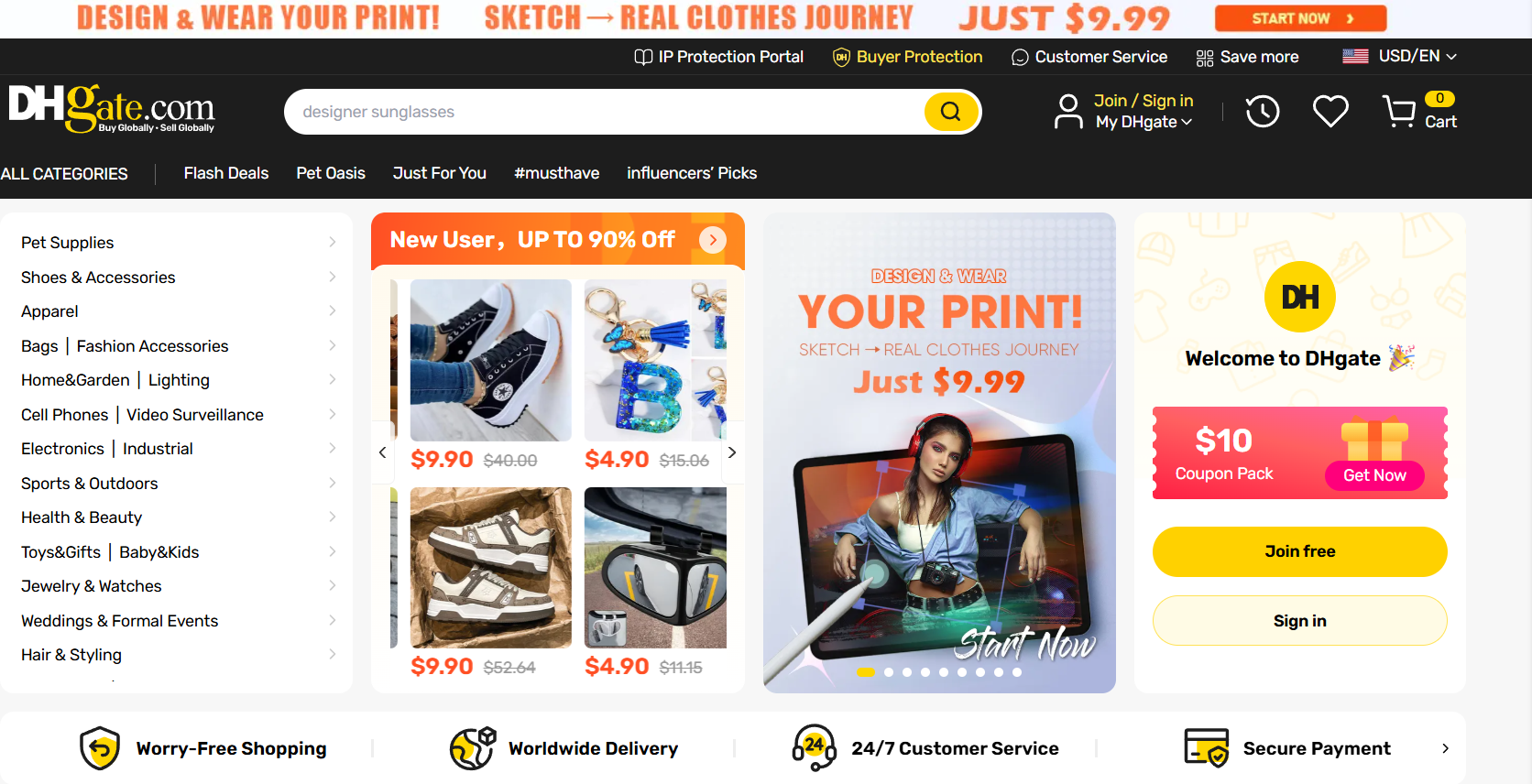
Its products cover multiple categories, including clothing, electronic products, and household goods, providing global consumers with a diverse range of shopping options.
● Aliexpress
AliExpress is one of the most well-known e-commerce platforms in the world.

Backed by the strength of the Alibaba Group, it offers a wide range of products, from fashion items to electronic devices, making it one of Temu’s strongest competitors.
Best for Home & Lifestyle Sites Like Temu
● LightlnTheBox
LightInTheBox takes “high cost performance + customization" as its core features.

It is particularly well-known in the fields of wedding dresses, prom costumes, home decoration, and small household appliances, becoming the first choice for many users seeking personalized and cost-effective products.
● Joom
Joom attracts users worldwide with its simple shopping interface, low prices, and free shipping.
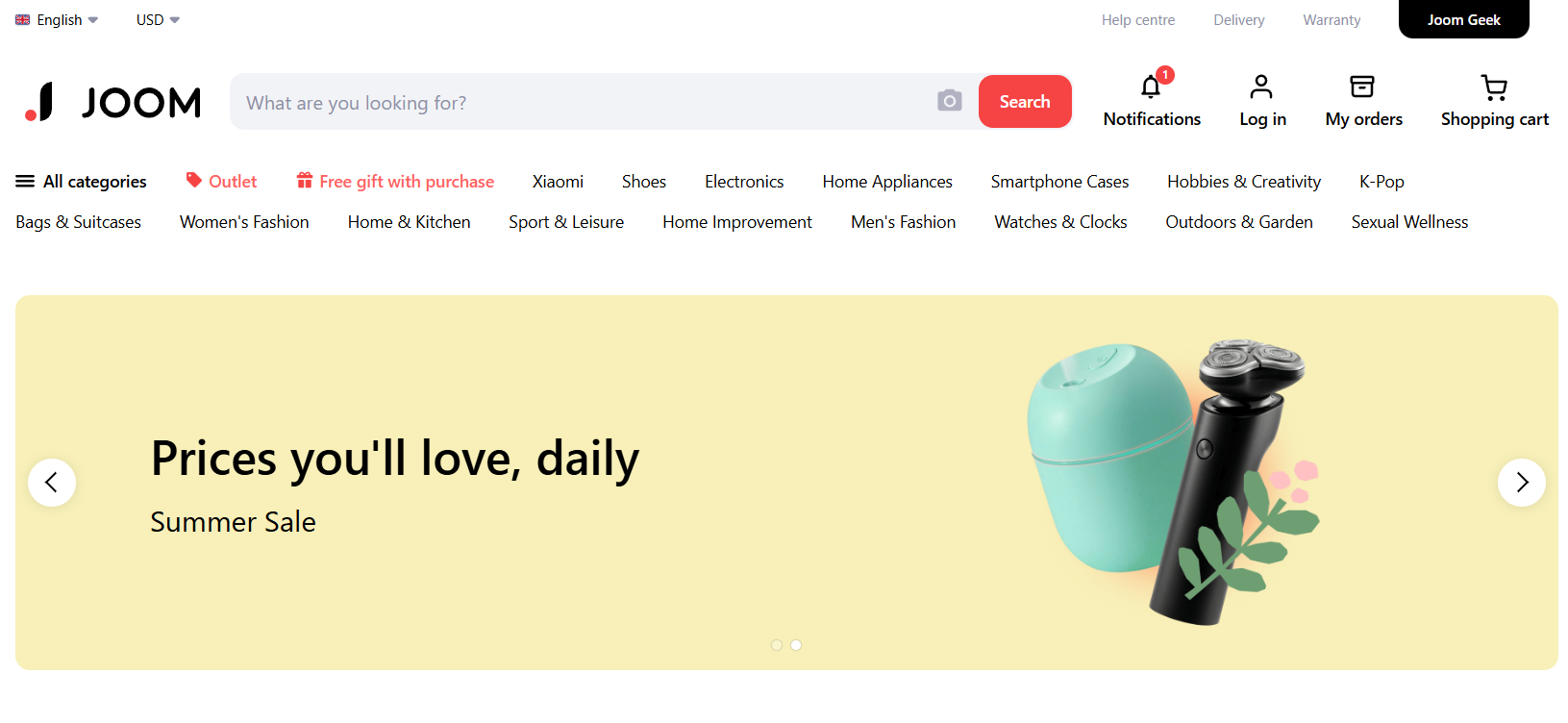
The platform primarily sells daily necessities, accessories, and small appliances, catering to the needs of the general public.
Best for Fast Shipping Sites Like Temu
● TikTok Shop
TikTok Shop is the most social platform among sites like Temu.
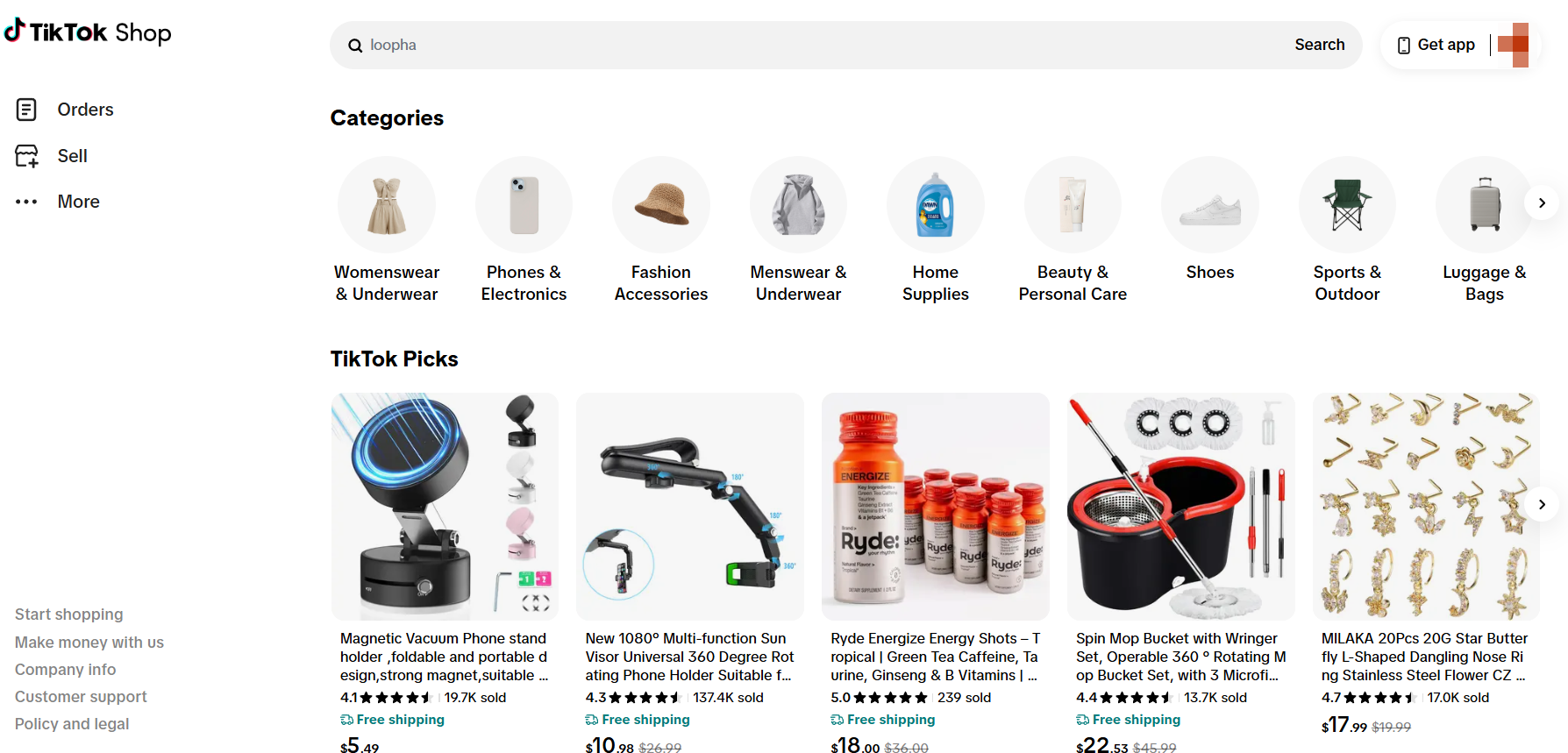
It seamlessly integrates short video content with shopping, allowing users to place orders while watching videos, making the entire process smooth. TikTok Shop also offers fast delivery, with items arriving within a few days.
● Wish
Wish is renowned among Temu alternatives for its ultra-low prices and wide variety of small items. The platform’s personalized recommendations help users easily discover novel and practical products.
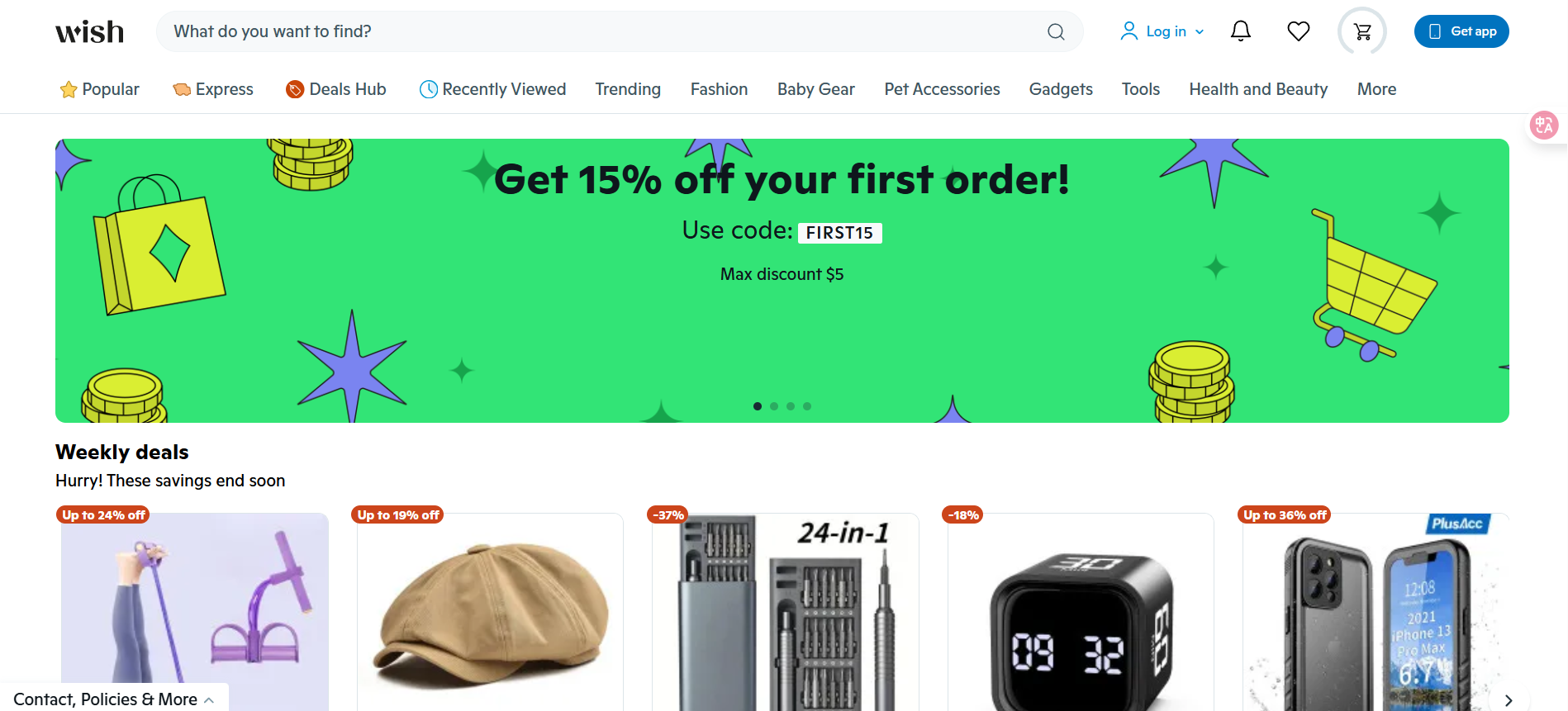
Products can be shipped directly from local warehouses, ensuring fast delivery and an efficient and convenient shopping experience.
Temu vs Alternatives: What are the Challenges for Dropshipping
Whether it’s Temu or its alternatives, these platforms attract a large number of dropshippers with their low prices. However, the inherent limitations of the platform model and supply chain also pose several risks and challenges for dropshippers.
From a dropshipping perspective, what are the main drawbacks of Temu and its alternative sites?
Limited Profit Margins
Since products on Temu and its alternative platforms are generally priced extremely low, dropshippers often have very limited room to mark up prices. This directly results in significantly compressed profit margins.
The narrow profit margins not only constrain sellers’ marketing budgets—making it difficult to afford social media ads, promotions, and other customer acquisition costs—but also significantly increase operational risks.
An independent store owner in the U.S. shared his experience on Reddit: he purchased a bracelet from Temu for $3 per unit and resold it on eBay for $7.
However, after deducting shipping fees, platform charges, and other expenses, the net profit per item was less than $1. With such razor-thin margins, it became nearly impossible to run basic Facebook advertising, let alone scale the business.
Lack of Brand Independence
It is difficult for these sellers to build their own independent brand.
Most products on platforms like Temu are generic, and the same item is often sold by dozens or even hundreds of sellers at the same time. From the product itself to the packaging design, everything looks nearly identical.
Many Shopify sellers who source products from Temu face another critical issue. When customers receive their orders, the packaging often carries Temu’s branding instead of the seller’s own.
This directly led to confusion among consumers regarding the seller’s brand identity, low repurchase rates, and made it extremely difficult to accumulate long-term brand equity.
Severe Product Homogenization
The issue of product homogenization is particularly prominent on Temu and its alternatives. In popular categories such as clothing, accessories, and electronic gadgets, products sold by different sellers often have no differences in design, functionality, or appearance.
This market environment makes it difficult for sellers to gain a competitive advantage by creating unique selling points. They ultimately fall into a vicious cycle of low-price competition.
For example, on platforms like TikTok Shop and Wish, a trending lipstick shade or a phone case is often listed by dozens of sellers at nearly identical prices.
To compete for customers, sellers are forced into frequent price wars, increasing market noise and reducing shopping efficiency.
Lack of Quality Control
The low-price strategy often comes with inconsistent product quality. Without strict quality control processes or standardized inspections, many products are shipped without comprehensive testing.
As a result, customers may receive products with cosmetic flaws, functional defects, or even potential safety risks.
In 2024, a children’s toy purchased from Temu by a UK customer was found to contain excessive chemical ingredients. After being reported byThe Sun, this incident sparked widespread discussion on social media and caused a crisis of confidence among the relevant buyers.
For dropshippers, such quality issues directly result in higher return rates, increased after-sales handling costs, and will also damage the reputation of their stores due to product-related problems.
Platform Rule Instability
The policies on Temu and its alternatives are often subject to change, covering areas such as fee ratios, logistics, return and exchange procedures, and compliance requirements.
The instability of these rules has created uncertainty for sellers, making it difficult to make long-term plans and forcing them to passively adapt to frequent policy changes.
At the beginning of 2025, the U.S. government revised its tax policies on low-cost cross-border parcels. In response, Temu updated its platform terms, including changes to shipping cost calculations and tax responsibilities.
This shift forced many sellers who rely on Temu for sourcing to adjust product pricing and logistics strategies on short notice. Failure to respond promptly could erode profits and severely disrupt business continuity.
The Ultimate Temu Alternative: Build Your Own Temu-Style Dropshipping Store
Dropshippers often struggle to maintain a stable business due to low profit margins, high product homogenization, and changing platform rules.
Building your own Temu-style standalone website can give you greater control. Not only can you establish an independent brand, but you can also flexibly select products, optimize profits, and run differentiated operations.
Why Dropshipping Is the Smarter Choice?
Compared with Temu and its alternative platforms, dropshipping has the following advantages:
High Profit Margins
By operating your dropshipping store, you can fully control product pricing without relying on low-price competition from platforms. You can flexibly formulate pricing strategies based on positioning, product value, and market demand.
Compared to the low profit margins on Temu or its alternatives, running your dropshipping store usually yields higher gross profits.
For example, the same product sold through a dropshipping store can achieve a profit margin of 30%–50%, significantly better than the per-unit profit on Temu.
Full Brand Control
In an independent dropshipping store, you can create your own brand image, with complete autonomy from store design, logo, to product packaging.
Building an independent brand can increase customer loyalty and repurchase rates, making your business sustainable in the long term.
Product Quality Guaranteed
Setting up your own dropshipping store gives you the power to directly select suppliers. You can choose professional and responsible partners.
Such suppliers usually conduct strict quality inspections on products before shipment, ensuring that every product received by customers meets the expected standards.
Unlike relying on Temu or other platforms where product quality is largely out of your control, building your dropshipping store can reduce return rates, boost customer satisfaction, and minimize after-sales disputes.
Flexible Shipping Methods
With a dropshipping store, you have full control over your shipping methods.
You can choose logistics channels based on product characteristics and your customers’ delivery expectations, and compare multiple carriers to select the most cost-effective solution, optimizing both speed and expenses.
Full Control Over Your Store
In your standalone website, you have complete autonomy and control—from product listings, pricing adjustments, promotions, to customer management, all core processes can be executed at your own pace.
Unlike Temu and its alternatives, the standalone online store allows you to quickly capture market trends, optimize advertising and operational strategies, and achieve long-term, controlled growth.
How to Start Your Own Temu-Style Dropshipping Store
You can build your own independent website by following these steps:
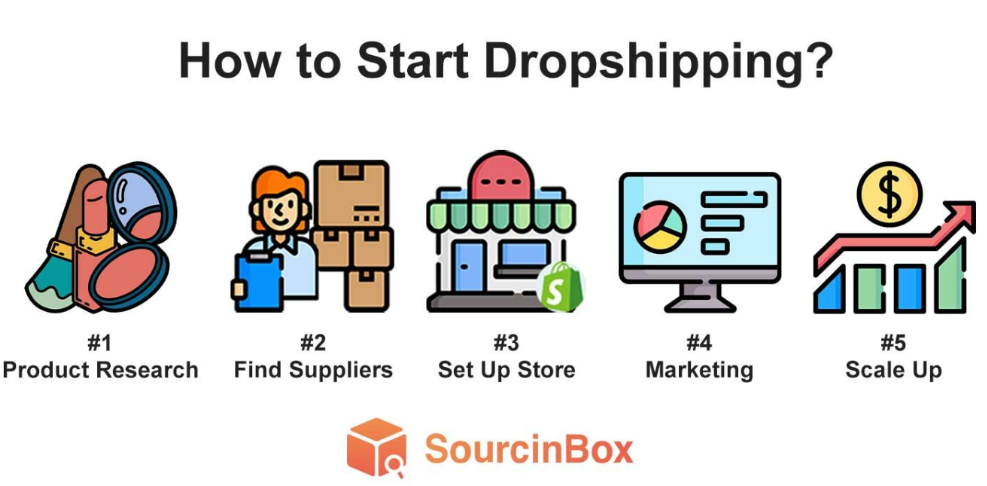
Identify Your Target Market
Define your target market by thoroughly understanding your potential customers’ profiles, including their age, consumer preferences, and shopping habits. Combine this with current consumer trends to precisely select suitable products.
This approach helps you accurately identify niche segments with rigid demand, laying a solid foundation for product selection and store operations.
Find Reliable Suppliers
Finding reliable dropshipping suppliers is crucial. They should not only offer competitive pricing but also ensure product quality.
This directly impacts the customer’s shopping experience and your store’s repurchase rate.
Set Up Your Dropshipping Store
Choose the right e-commerce platform—such as Shopify, WooCommerce, or Etsy—and integrate your store with a dropshipping platform like SourcinBox.
The dropshipping agent will handle your orders and fulfillment, leaving you free to focus solely on promoting your store.
Market Your Store
Drive traffic to your store through multiple channels. Utilize social media advertising, optimize SEO, and collaborate with KOLs to reach a wider audience.
These methods will help you reach more potential customers, allowing more target customers to see your products and place orders.
Easy Dropshipping With SourcinBox
SourcinBox is an experienced dropshipping agent and procurement supplier specializing in providing one-stop dropshipping services. We offer:
● Excellent 1-on-1 Customer Service
We have a group of professional customer managers who are always ready to handle all your problems.
● Inventory Management
We provide free warehousing service for all customers placing orders on our app who need to keep inventory.
● Fast Shipping and Delivery
We have established deep cooperation with major carriers in China. We can provide a wide range of shipping solutions that cover popular destinations worldwide, meeting the delivery needs of different regions.
● Private Label Service
We provide a seamless private label solution, enabling you to realize product branding and customized business.
● Reliable After-sales Service
We provide responsible after-sales support for product damage, incorrect delivery, or package loss. Once we confirm the problem is our fault, we will arrange for a free redelivery or refund according to your needs to ensure your rights and interests are properly protected.
If you want to stay ahead in the competitive cross-border e-commerce market, the best Temu alternative isn’t just switching platforms—it’s building your own independent website today.
Take action now with SourcinBox and take full control of your e-commerce future.
FAQs
1. How can I transition from Temu to my own independent dropshipping store?
Start by identifying your best-selling products and sourcing them directly from reliable suppliers. Work with specialized sourcing agents like SourcinBox to secure better pricing and quality control. Build your own store with Shopify, WooCommerce, or another platform to gain full control over branding and customer experience.
2. Can I use Temu for dropshipping directly? Is Temu good for dropshipping in 2025?
Currently, Temu does not officially offer a dropshipping program or API access. While some sellers attempt to place orders manually for each customer, this approach is risky due to inventory fluctuations, shipping times, and potential policy violations. Building your own supply chain or partnering with a sourcing agent is more reliable.
3. How can I find Temu products that are suitable for dropshipping?
Look for lightweight, non-regulated items with high demand and stable stock levels. Test by ordering small batches to check shipping speed and product quality. Tools like Google Trends or TikTok Creative Center can help you validate demand. Moreover, you could contact our customer manager for more information.


Share Article: