Jewelry Dropshipping Guide: Best Products & How to Start in 2027

SIB Content Team
Jewelry serves many purposes, from everyday styling and self-expression to celebrating milestones and giving gifts. With earrings, necklaces, rings, and bracelets available in a wide range of materials, styles, and price points, dropshippers have plenty of options for building a focused jewelry collection.
The global jewelry market continues to grow. According to Grand View Research, it was worth approximately $381.5 billion in 2025 and is projected to exceed $578.5 billion by 2033. McKinsey and BoF's The State of Fashion 2026 also forecasts 4.1% average annual growth in jewelry sales volume from 2025 to 2028, with self-purchasing, personal expression, and gifting among the main drivers.
A large market doesn't guarantee an easy business. Consistent materials, durable plating, accurate sizing, reliable quality across batches, and packaging that prevents scratches and tangles all affect customer reviews, returns, and store performance.
This guide covers jewelry products to dropship in 2027, where to find jewelry dropshipping suppliers, and the steps involved in sourcing, setting up your store, and marketing your products. The goal is to help you decide how to enter the market and start building a jewelry brand.
Is Jewelry a Good Niche for Dropshipping?
Can jewelry dropshipping make money? Yes, but it's a poor fit for anyone hoping to make quick profits by listing products at random.
With broad consumer demand, manageable shipping costs, and a wide variety of sub-niches, jewelry is a solid dropshipping category to consider. But competition between similar products, material compliance, and product quality remain key challenges. There is still room for dropshippers willing to put effort into product selection, product photography, and building a distinctive brand.
Broad Consumer Demand
Jewelry demand goes beyond weddings, engagements, and anniversaries. Everyday styling, treating yourself, birthdays, Mother's Day, Valentine's Day, graduations, and Christmas all give shoppers reasons to buy.
More consumers are buying jewelry for themselves, too. In a survey cited by The State of Fashion 2026, 42% of women and 35% of men said they were buying more jewelry for themselves than two or three years ago. For dropshippers, marketing therefore does not have to focus only on gifting. It can also target everyday styling, men's jewelry, couples' accessories, and gender-neutral designs.
There is also plenty of flexibility in pricing and brand positioning. Affordable fashion jewelry can draw shoppers with current designs and matching sets. Sterling silver, pearls, and gemstones appeal to customers who pay closer attention to materials, while personalized pieces can be marketed as gifts built around names, dates, and meaningful occasions.
Lightweight and Easy to Ship
Most jewelry is small and lightweight. Compared with apparel, home goods, or small appliances, individual pieces generally take up less space and add less weight to a shipment. That can help keep warehousing and international shipping costs manageable for cross-border dropshippers.
If you ship through a dropshipping agent, jewelry's small size is also useful for warehousing and order picking. More styles, colors, and sizes fit into the same warehouse space, making it easier to replenish stock as demand changes. Necklaces, earrings, and rings can also be packed together with proper protection, making matching sets and bundles practical options.
Diverse Styles and Branding Opportunities
A jewelry store can specialize by material, design, or buying occasion. You might focus on minimalist jewelry, pearls, gemstones, or boho beaded pieces rather than trying to carry every type of accessory.
Start with a few core pieces and present them through consistent store visuals and high-quality product photography. Once certain styles gain traction, you can add custom packaging and logo details to develop a more recognizable brand.
Best Jewelry Products to Dropship in 2027
The best jewelry to test isn't necessarily the trendiest. Look for clear material specifications, reasonably consistent quality, a price point that fits your audience, and features you can show through photos or short videos.
Below are eight jewelry categories you could explore in 2027, spanning materials, designs, shopping occasions, and personalization.
You don't have to keep these categories separate in your store. A gold-plated pearl necklace, for example, fits both the gold-plated and pearl collections. Mix and match styles according to your brand's focus rather than treating the categories as rigid rules.
1. Stainless Steel Jewelry
Stainless steel jewelry suits affordable everyday collections, men's accessories, and stores that emphasize durability. From necklaces and rings to bracelets and earrings, silver-tone, gold-tone, and black finishes can work with everything from casual office wear to streetwear.
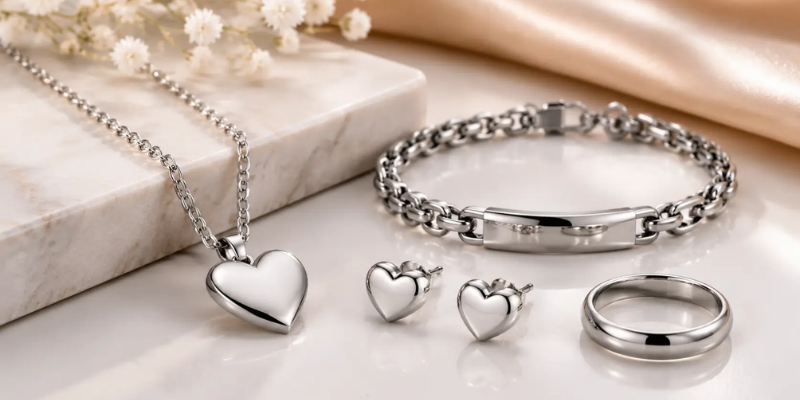
For everyday stainless steel jewelry, these styles are a good starting point:
- Stainless steel cross necklaces
- Stainless steel chain bracelets
- Men's Dragon-Scale Steel Bracelet
- Stainless steel hoop earrings
- Stainless steel rings
316L stainless steel is a common choice for everyday jewelry because it resists corrosion well. Some pieces also use PVD (physical vapor deposition) coatings to create gold or black finishes and improve resistance to wear and color fading.
Waterproof, tarnish-resistant, and hypoallergenic are common jewelry claims, but not every stainless steel piece is completely allergy-free or permanently resistant to fading. Ask suppliers about the exact metal grade, coating process, and supporting test reports before using these claims in product listings. Unsupported promises can lead to complaints and returns.
2. Silver Jewelry
Silver jewelry appeals to shoppers looking for classic, versatile pieces made with precious metals. Sterling silver (925 silver) is one option for midrange and higher-priced dropshipping collections.

It contains 92.5% silver, with the remaining 7.5% typically made up of metals such as copper for added hardness and durability. That makes it more practical than fine silver for many everyday necklaces, rings, earrings, and bracelets.
Popular classic sterling silver styles include:
- S925 Sterling Silver Heart Pendant Necklace
- Sterling Silver Water Drop Moissanite Necklace
- Silver Chunky Stackable Rings Set
- 925 Sterling Silver Phoenix Tail Bracelet
- Sterling Silver Moissanite Ring
Sterling silver also pairs with pearls, natural or lab-created gemstones, and custom engraving. Those combinations give dropshippers ways to build collections for everyday wear, personal style, and gifts at different price points.
Accurate material labeling is essential when sourcing silver jewelry. Three terms are especially important:
- Sterling Silver (925 Silver): A silver alloy containing 92.5% silver, classified as a precious-metal material.
- Silver-Plated: A coating of silver over a base metal, often copper or brass.
- Silver-Tone: Refers to the color, not necessarily to any silver content.
If you sell to US customers, follow the FTC Jewelry Guides and describe precious-metal content accurately. Selling sterling silver or other precious-metal jewelry in the UK also means checking the applicable hallmarking rules, including material markings and certification requirements where relevant.
Sterling silver can tarnish over time when exposed to sulfur compounds in the air, moisture, or certain chemicals. Include suitable care instructions and, where appropriate, a silver polishing cloth. Avoid claims such as 'never tarnishes' so customers know what to expect from the material.
3. Gold-Plated Jewelry
Gold-plated jewelry gives shoppers a gold-tone look without the price of solid gold. Layered necklaces, stacking rings, hoops, and bracelets work well in fashion and gift-focused collections, and their styling is easy to demonstrate through outfit photos and short videos.

Gold-plated styles worth listing:
- 18K Gold-Plated Cross Pendant Necklace
- 18K Gold-Plated Geometric Hoop Earrings
- Gold-Plated Stainless Steel Bracelets
- 14K Gold-Plated Religious Charm Bracelet
- Gold-plated Titanium Steel Ring
Gold-tone jewelry can vary widely in quality. The base metal, application method, and gold-layer thickness affect how well a piece keeps its finish and resists wear. It's worth understanding three common terms before sourcing these products.
| Type | Material and construction |
|---|---|
| Gold-Plated | A thin gold layer electroplated over a base metal such as brass or another alloy. |
| Gold-Filled | A qualifying gold layer mechanically bonded to a base metal, typically with a greater proportion of gold than standard plating. |
| Gold Vermeil | Gold applied over sterling silver, with the layer meeting the relevant thickness requirements. |
The rules for these labels vary by market. Confirm the base metal, gold-layer thickness, and manufacturing method with your supplier before describing a product. Claims such as 'waterproof' or 'tarnish-resistant' should also be backed by reliable evidence.
4. Pearl Jewelry
Pearl jewelry combines timeless appeal with strong gifting potential. In a consumer survey by The Plumb Club, 81% of respondents said they would buy pearl jewelry as a gift. The pearlcore trend has also moved pearl designs beyond the traditional strand necklace.

Baroque pearls have an irregular, organic look, while pearl-and-chain designs feel more contemporary. Simpler pearl pieces work well for office outfits and wedding jewelry.
Pearl designs range from classic strands to modern mixed-material pieces:
- Freshwater Pearl Strand Necklace
- Rhinestone & Faux Pearl Clavicle Necklace
- Layered Faux Pearl Tassel Necklace
- Dainty Freshwater Pearl Bracelet
- Small Pearl Earring Set
- Baroque Pearl Jewelry
Find out whether a product uses natural, cultured, or imitation pearls. Freshwater cultured pearls are genuine pearls; glass or resin imitation pearls simply resemble them. Mother-of-pearl comes from the iridescent inner layer of a shell and is different from a whole pearl.
Confirm the materials with your supplier and describe them accurately on the product page. Check luster, visible blemishes, sizing, and attachment quality, and use real product photos to set realistic customer expectations.
5. Gemstone Jewelry
For shoppers who use jewelry to express their style, a gemstone's color and natural pattern may matter more than an elaborate setting. In a 2025 survey from The Plumb Club, 39% of respondents preferred vibrant colors in colored gemstone jewelry, compared with 32% in 2023.

Amethyst, tiger's eye, turquoise, and moonstone can be paired with sterling silver or gold-plated metals in necklaces, rings, earrings, and bracelets. Depending on the stone and setting, these pieces can suit boho, vintage, or minimalist jewelry collections.
Gemstone colors and patterns can be featured in pieces such as:
- Layered Tiger Eye Stone Sun Pendant Necklace Set
- Chunky Gold-Tone Tiger's Eye & Turquoise Rings Set
- Labradorite Stud Earrings
- Amethyst Drop Earrings
- Moonstone Pendant Necklace
When sourcing gemstone jewelry, find out exactly what the stones are. Natural, lab-created, and simulated gemstones are different categories, and stones may also have been dyed, heated, or otherwise treated. Don't describe imitation stones as natural gemstones.
Natural stones can vary in color, pattern, and inclusions. Use real photos, and inspect the stones, settings, and metal parts. If you market crystals around their cultural meaning, stick to symbolism and design inspiration rather than unsubstantiated healing or medical claims.
6. Beaded Jewelry
Beaded jewelry suits casual, vacation, and boho collections. Grand View Research valued the global beaded jewelry market at approximately $6.94 billion in 2024 and projects it will reach $11.68 billion by 2030.

Natural stones, freshwater pearls, seed beads, polymer clay, and acrylic beads create very different looks. Brightly colored beads suit playful summer collections; natural stones and pearls work well in simpler, nature-inspired everyday pieces.
Different bead materials and stringing techniques can be used to create:
- Gemstone beaded bracelets
- Pearl beaded necklaces
- Colorful beaded bracelets
- Glass bead earrings
- Seed bead jewelry
- Multi-Strand Beaded Necklace
While beaded jewelry is relatively easy to source, bead quality and clasp or stringing construction directly impact how well a piece wears. Test for color transfer and inspect the knots, connections, and clasps. Stretch-cord bracelets also need suitable elasticity and durability so they don't break during wear.
For stores targeting everyday jewelry shoppers, keep ready-to-wear accessories separate from loose DIY beads and craft supplies. Children's beaded jewelry also requires reviewing the applicable material and small-parts safety rules in the markets you sell to.
7. Birthstone Jewelry
Birthstone jewelry links gemstones to the 12 months of the year, giving each piece personal significance. That makes it a natural fit for birthdays, Mother's Day, and anniversaries. In The Plumb Club's 2025 consumer survey, 65% of respondents said they actively look for jewelry featuring their birthstones.

For birthday gifts and family-themed collections:
- Birthstone necklaces
- Stackable Birthstone Rings
- Birthstone bracelets
- Birthstone pendants
- Family birthstone jewelry
You can organize birthstone necklaces, rings, and bracelets by month, or offer family birthstone jewelry with stones representing children, partners, or parents. Names, initials, and engraved dates add another personal touch.
8. Personalized and Customized Jewelry
For birthdays, anniversaries, and holiday gifts, shoppers can personalize jewelry with names, dates, photos, or their own designs. Popular options range from name necklaces and initial pendants to photo projection necklaces and engraved rings.

Personalized jewelry styles:
- Name necklaces
- Initial pendants
- Engraved bracelets
- Custom photo pendants
- Personalized rings
- Custom charm jewelry
Personalized jewelry usually starts with an existing design and adds a name, initial, date, or engraving. Customized jewelry can involve more extensive changes to shape, materials, or gemstone arrangements. Since suppliers vary in what they can make, confirm the available options, production time, and minimum order quantity (MOQ) for each item.
Personalized pieces can raise average order value, but order accuracy matters more. A misspelled name, wrong font, size, date, or image can leave you with an item that's hard to resell. Show the available options, character limits, font previews, production times, and deadlines for changes on the product page, and verify customer details before sending an order to production.
Agree with suppliers in advance on how to handle quality issues, production errors, and incorrect details submitted by customers. Set clear return policies that comply with consumer protection laws in your target markets.
Where to Find Jewelry Suppliers for Dropshipping?
Price shouldn't be the only factor when choosing jewelry dropshipping suppliers. A necklace that fades after a few wears or an engraving with the wrong letter can quickly lead to returns and negative reviews. Ask whether suppliers handle single-item orders, provide accurate material details, offer samples, and resolve defective or incorrect shipments.
There are three common ways to source jewelry: work directly with manufacturers and wholesalers, use online wholesale marketplaces, or partner with a dropshipping sourcing agent.
Jewelry Manufacturers & Wholesalers
If you've settled on your main materials, design style, and target cost, contacting a jewelry manufacturer or specialist wholesaler directly may be the simplest route. It's easier to discuss specific production methods, engraving, or logo-branded jewelry boxes and pouches with the supplier making or selling the products.
Manufacturers are better suited to made-to-order designs, custom sizes, and OEM/ODM or private label product development. Wholesalers generally carry ready-made styles, which can work better for stores looking to select products from an existing catalog.
Direct sourcing also means handling more of the supplier coordination yourself. Many factories primarily accept bulk orders rather than individual dropshipping orders, and may require MOQs. Custom pieces can also have longer production lead times.
A store selling silver, stainless steel, beaded, and engraved jewelry may need several factories with different production capabilities. Before committing, confirm MOQs, sampling costs, production timelines, inventory arrangements, single-order dropshipping support, and after-sales terms.
Online Wholesale Marketplaces
Alibaba, AliExpress, and 1688 are useful starting points when you're testing jewelry styles or comparing sourcing prices. But each marketplace serves a different purchasing need.

- Alibaba: Offers access to manufacturers and wholesalers. It's useful when you have some order volume and want to negotiate OEM/ODM production or custom packaging.
- AliExpress: Carries a large selection of ready-made styles, with many listings available for single-item purchase and cross-border delivery. That makes it useful for early product tests. Still, make sure each seller can fulfill orders reliably and meet your packaging and after-sales requirements.
- 1688: Focuses on China's domestic wholesale market, with a broad range of jewelry products and suppliers. Some listings may offer attractive purchase prices, but many sellers don't ship individual orders internationally. Dropshippers often need a sourcing agent to inspect, pack, and handle cross-border delivery.
Not every seller on these platforms offers dropshipping. Look at the supplier's history, order records, and reviews, then ask about single-order shipping, destination countries, estimated delivery times, custom packaging, and the process for defective or incorrect orders.
Watch out for identical photos showing up across different suppliers. The products behind those images can differ in materials, plating, and workmanship. When sourcing sterling silver, natural gemstones, or gold-plated jewelry, order samples before listing, inspect the size and finish, and ask for material details and supporting documents. A photo and product title aren't enough.
Sourcing Agents for Dropshipping
A dropshipping sourcing agent can be useful once you're managing multiple jewelry SKUs or factories. Chains, pendants, gemstone components, boxes, and branded packaging may all come from different suppliers. Coordinating production, quality control, and shipping across those factories can take up a lot of time.
A sourcing agent can coordinate product sourcing from photos or links, supplier quotes and manufacturing requirements, samples, quality checks, and private label packaging. Some agents also handle warehousing, inventory, and international order fulfillment, so you don't have to manage each factory and shipping provider separately.

For example, SourcinBox can help dropshippers find jewelry suppliers, discuss sourcing requirements, and arrange samples and quality checks. Depending on your store's needs, it can also support custom packaging, warehousing, and global order fulfillment. You can submit product photos, links, or specifications for SourcinBox to coordinate purchasing and shipping.
Compare sourcing agents on more than price, response time, and shipping options. Find out what their quality checks cover. For sterling silver, gold-plated pieces, and natural gemstones, ask whether they can check SKU specifications and appearance, review suppliers' material documents, and support third-party testing when needed. Appearance alone won't establish material authenticity.
How to Start a Jewelry Dropshipping Business
You don't need hundreds of listings to start a jewelry dropshipping business. Choose a niche, pick a few core products, and test customer demand and your supply chain before expanding based on real sales.
Choose Your Jewelry Niche
Start by deciding what jewelry you'll sell and who it's for. A focused collection is often more manageable than an accessory store carrying every style. Possible niches include minimalist everyday jewelry, stainless steel pieces, pearls and gemstones, personalized and birthstone gifts, and modern gold-plated jewelry.
Look at your audience's style preferences, when they'll wear the jewelry, and what they're willing to pay. Competitor research, customer reviews, and market trends can help you spot popular designs and gaps in existing products.
Find Reliable Product Suppliers
Once you've chosen a product direction, compare potential suppliers. Look beyond the quote to available specifications, MOQs, customization options, inventory arrangements, single-order fulfillment, and shipping to your target markets.
Get quotes and order samples from more than one supplier, then compare the products, costs, and lead times. Agree on how defects, wrong items, returns, and exchanges will be handled before customer orders start coming in.
Set Up Your Online Store
Shopify is a popular platform for independent jewelry stores, while WooCommerce works well for businesses already using WordPress. Make products easy to browse with collections such as Necklaces, Earrings, Rings, Pearl Jewelry, and Personalized Gifts, organized by type, material, or occasion.
Strong jewelry product pages are central to optimizing a Shopify dropshipping store. Include accurate material details, plating methods, chain lengths, dimensions, weight, gemstone or pearl types, care instructions, and shipping policies. Personalized listings should also spell out customization steps, character limits, and estimated production times.
Don't rely on front-facing product photos alone. Add on-model shots, close-ups, and size references. Clear size guides are particularly useful for rings, bracelets, and necklaces, where a poor fit can lead to returns or exchanges.
Planning to sell on Etsy? Check its rules on dropshipping and reselling first. Repackaging mass-produced jewelry or adding your logo doesn't make it eligible for the handmade category. Original designs made with qualifying production partners must comply with Etsy's policies.
Price Your Jewelry Products
Don't price jewelry using the supplier quote alone. Account for customization, packaging, international shipping, payment processing, platform fees, advertising, and possible after-sales costs before setting retail prices.
Pricing will vary by product. Everyday basics need to fit your audience's expectations, while engraved pieces, natural gemstones, and distinctive designs can support different price points based on materials, craftsmanship, and brand positioning. Research what comparable products sell for in your target market instead of competing on price alone.
Matching necklace-and-earring sets, stacking-ring bundles, couples' bracelets, and birthstone gift sets can also increase average order value (AOV). If a set includes multiple SKUs, confirm that your fulfillment system supports bundle orders and combined shipping, and account for packaging size, international shipping costs, and stock levels.
Market and Sell Your Jewelry
Jewelry is well suited to social media marketing on TikTok, Instagram Reels, and Pinterest. Go beyond static product shots with on-model videos, outfit styling, layered jewelry looks, gift unboxings, and the customization process.
Build content around three reasons people buy jewelry:
- Style: Feature workday outfits, seasonal looks, and jewelry layering.
- Meaning: Focus on names, meaningful dates, birthstones, and family connections.
- Gift: Plan campaigns around Valentine's Day, Mother's Day, birthdays, graduations, weddings, and Christmas.
Match the content to the product. Pearls work with elegant outfits and gift ideas, colorful beads suit vacation styling, and personalized necklaces can be shown through the making process and the stories behind them.
Make sure your ads and listings reflect the jewelry customers will receive. Don't label ordinary alloys as precious metals or promise that pieces are completely hypoallergenic or never fade without evidence. Accurate descriptions help prevent a mismatch between expectations and the delivered product.

Tips for Running a Successful Jewelry Dropshipping Store
A successful jewelry store needs more than one hit product. Consistent quality, a recognizable brand, and reliable after-sales service help earn trust and give customers reasons to buy again.
Check Product Quality and Order Samples
Supplier photos and specification sheets are a starting point, not proof of quality. Order samples before listing products, then check the details that matter for each type of jewelry.
- Necklaces and bracelets: Check chain strength, clasps, solder joints, length, and whether pieces tangle easily.
- Earrings: Look for bent posts, missing backs or parts, and differences between each pair.
- Rings: Verify sizing, smooth edges, secure settings, and visible scratches.
- Plated pieces: Compare colors and surface finishes across samples, then look for changes after rubbing.
- Gemstones and pearls: Review material and treatment details, then look at color variations, attachment quality, and surface condition.
- Custom pieces: Check spelling, fonts, placement, production lead times, and the design approval process.
Children's jewelry requires extra attention to the safety rules in each target market. In the US, the Consumer Product Safety Commission (CPSC) regulates lead content and surface coatings in children's jewelry. Additional material and safety rules may apply if a product also qualifies as a children's toy or another regulated category.
A good first sample doesn't guarantee that later batches will be identical. As sales become consistent, inspect products from different batches for materials, color, sizing, and workmanship. Suppliers' production standards can change as volume increases.
Develop a Distinctive Jewelry Brand
There are plenty of lookalike jewelry products, and competing only on supplier photos and price makes it hard to stand out. Start with a specific audience, a consistent aesthetic, and product presentation that reflects your brand.
A minimalist everyday jewelry store shouldn't look the same as one selling colorful gemstones or personalized gifts. Let that difference show in your assortment, photography, and site design. Original product shots, close-ups, and lifestyle images show the materials, fit, and style more convincingly than generic supplier photos.
Once your core styles have been tested, you can add branded packaging and private label details, from jewelry cards and thank-you notes to logo pouches and custom boxes. For products with steady demand, exclusive designs or additional customization may be worth exploring without committing too much money upfront.
Optimize Packaging, Shipping & Return Policies
Jewelry packaging has to protect the product without making the parcel unnecessarily bulky or losing the gift experience. Secure delicate chains to jewelry cards so they don't tangle, protect earring posts from bending, and keep pearls and polished metal away from hard components that could scratch them.
Choose jewelry cards, pouches, boxes, and protective outer packaging to suit your price point. Branded gift boxes and thank-you cards can improve the unboxing experience, but rigid packaging can also increase parcel size and international shipping charges. Weigh those costs against the product's price and destination market.

Work with shipping services that fit your destination markets and give customers realistic delivery estimates. Engraved or photo-personalized jewelry may need extra production time, so include that in the stated timeline to avoid complaints or refunds caused by unexpected delays.
Spell out how you'll handle sizing issues, shipping damage, quality defects, lost packages, and errors in customized orders. For items such as earrings, where hygiene may affect returns, make sure the policy follows your target market's consumer protection rules and the platform's requirements.
Agree with your supplier or sourcing agent on replacements, refunds, and where returns will be received before problems arise. Your store's return promises should match the process you can actually carry out, helping reduce disputes and keep the customer experience dependable.
Frequently Asked Questions
1. Is Jewelry Dropshipping Profitable in 2027?
Jewelry dropshipping can be profitable in 2027, but results depend on your niche, product costs, marketing spend, and returns. Distinctive styles, accurate material descriptions, and consistent quality offer a stronger long-term approach than price competition alone.
2. How Much Does It Cost to Start Jewelry Dropshipping?
The cost depends on your store platform, samples, and marketing budget. Expect expenses for subscriptions, product samples, photos or other creative assets, and ad testing. Start with a few products, then decide whether to invest in inventory and branded packaging once sales are more consistent.
3. What Are the Best Types of Jewelry to Dropship for Beginners?
Stainless steel necklaces, simple earrings, and basic gold-plated bracelets are practical starting points because they involve fewer sizing and customization issues. Pay attention to material claims, product quality, and whether the supplier can fulfill orders reliably.
4. Can I Dropship Jewelry on Etsy?
Etsy generally restricts conventional dropshipping and resale of mass-produced, ready-made jewelry. Qualifying original designs or buyer-personalized items may be made through production partners if the shop follows Etsy's requirements. See Etsy's policy for the applicable rules.
5. Can I Dropship Jewelry from China?
Yes. You can find jewelry through Chinese manufacturers, wholesale platforms, or sourcing agents such as SourcinBox, which can help with samples, quality checks, and international fulfillment. Verify materials, shipping timelines, and relevant market requirements before listing products.
Start Your Jewelry Dropshipping Business with SourcinBox
Finding jewelry styles to sell is often the easy part. Sourcing and fulfillment take more work, especially when your store carries stainless steel, silver, gemstones, and personalized pieces. You may be talking to several factories about materials and production, while buying jewelry boxes, branded cards, and pouches from others. Once orders pick up, chasing production updates, checking quality, and arranging shipments can take time away from choosing products and marketing your store.
A dropshipping sourcing partner like SourcinBox can coordinate much of that work. Send us your jewelry photos, product links, or specifications, and we'll work with suppliers on quotes, purchasing requirements, samples, and quality checks. SourcinBox also supports branded packaging, warehousing, inventory, and worldwide order fulfillment as your store grows.
You don't need a large catalog when you're starting. Pick a few styles that fit your store, check the samples, sourcing prices, and shipping options, then expand based on actual sales. It's a way to keep early risks manageable and spend more time on product design, your brand, and growing your customer base.
Have a jewelry style you want to sell? Send a product photo or link to SourcinBox to discuss sourcing and order fulfillment.


Share Article: